FOOD FOR THOUGHT: What does research suggest?

In 2004, Dave Smith and Stewart Bruce-Low of the Department of Sport and Exercise Sciences at the University of Liverpool in England began to investigate High-Intensity vs . High Volume strength training - examining the parameters of sets, repetitions, training frequency, duration, intensity and speed of movement. In December of that year they published an article in the Journal of the American Society of Exercise Physiologists titled:
The research duo examined twenty studies that explored speed of movement during exercise and arrived at two outcomes: ONE, that slow training was superior to explosive training (for strength and power); and TWO, that there was no significant difference between slow and fast speeds. In four studies, they identified and exposed the serious risk of injury from explosive training. “It appears that Jones’ recommendation,” they concluded, “that slow, controlled weight training is all that is necessary to enhance both muscular strength and power is correct.”
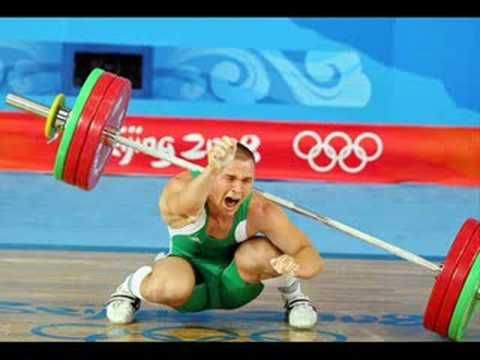
In their investigation, explosive training produced, at best, a similar result - and at worst, an inferior result - to that of slow, controlled exercise . . . with one major difference: explosive training embodied an elevated risk of injury. High-risk exercise with no added benefit makes about as much sense as hitting your head against a wall to prepare for the impact forces experienced in an American football game.
Despite clear facts to the contrary, advocates of explosive training continue to preach their unique version of physiology, and cite research to support their claims, that:
-
Fast-twitch muscle fibers (thought to be prime contributors to power-oriented performances) are activated by a fast speed of movement. And conversely, that slow-twitch muscle fibers are activated by a slow speed of movement. Hence the mantra, “If you train fast, you’ll be fast; and if you train slow, you’ll be slow.”
-
Fast speed of movement during exercise is vital to develop “power” for sports and/or activities of daily living.
The second claim has been critically challenged, if not negated, by the research of Smith and Bruce-Low. Which leaves us with the first claim, that muscle fibers are preferentially activated by speed of movement.
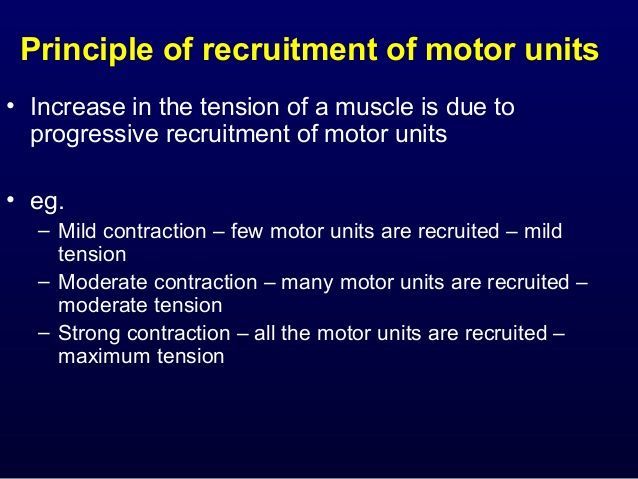
In support of that premise, Dr. Ralph N. Carpinelli, Human Performance Laboratory at Adelphi University in Garden City, New York made an exhaustive review of the scientific literature on the subject and reported his findings in the Journal of Exercise Science and Fitness , volume 6, number 2, 2008.
Carpinelli’s analysis of muscle-fiber recruitment revolved around the Size principle, in his words,
“ perhaps the most supported principle in neurophysiology.”
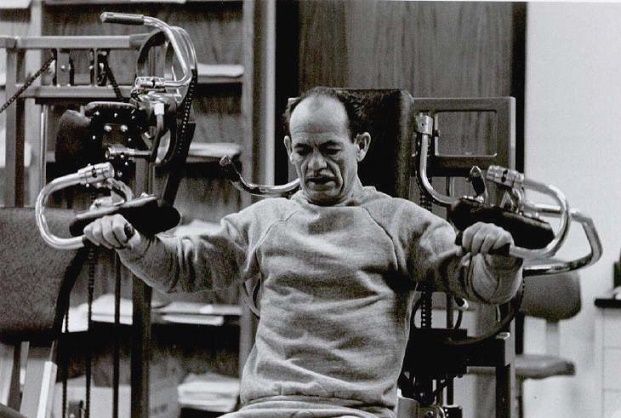
TAKU’s NOTES: After our first 50 episodes we’re taking a short break, as we get ready to produce even more awesome content for our T.N.T. listeners. With that in mind, this week’s article features some interesting information in support of Effort-Based strength training with regards to the work of NAUTILUS inventor Arthur Jones.
Experience the TNT Strength difference with a free workout.
START YOUR FITNESS TRANSFORMATION WITH A
FREE WORKOUT
Complete the form and we'll set up an appointment for you.
Recent Articles