To Squat or Not to Squat: A TNT Strength Reality Check
Estimated Time to Read: 5–6 minutes
⚡ TL;DR
The squat isn't mandatory. It's a tool—not a requirement. For most people, especially adults training for health and longevity in Oakland's Rockridge and North Berkeley areas, well-designed machines like the leg press or Brilliantly designed Nautilus Duo-Squat can build stronger legs more safely and efficiently—without beating up your spine.
The Myth of the "King of All Lifts"
Somewhere along the way, the barbell squat got crowned the "king."
Let's pump the brakes.
The barbell itself has only been around since the early 1900s. It's a tool. A good one—but still just a tool. Not a sacred rite of passage. Not a requirement for building strong, capable legs.
At TNT Strength here in Oakland's Rockridge / North Berkeley community, we don't worship tools—we evaluate outcomes.
What Actually Matters: The Movement
The squat pattern? Absolutely valuable.
It's a multi-joint movement involving:
- Hips
- Knees
- Ankles
That's where the benefit lies.
But here's the problem…
When you perform a barbell squat, the load sits on your spine. Now the exercise is no longer just about training your legs—it becomes a full-body stability challenge where the lower back often becomes the limiting factor.
And that's where things go sideways.
The Weak Link Problem
Your hips and legs are incredibly strong.
Your lower back? Not designed to be the bottleneck.
In a traditional squat:
- The spine is vertically loaded
- Fatigue often shows up in the low back first
- Technique breaks down under fatigue
- Injury risk goes up—especially for taller lifters or aging athletes
You'll often see:
- Forward lean
- Partial range of motion
- Compensations that defeat the purpose
At that point, are we really training the legs… or just surviving the set?
A Smarter Approach: Remove the Limiting Factor
At TNT Strength, we ask a simple question:
"What's the safest, most efficient way to load the target muscles?"
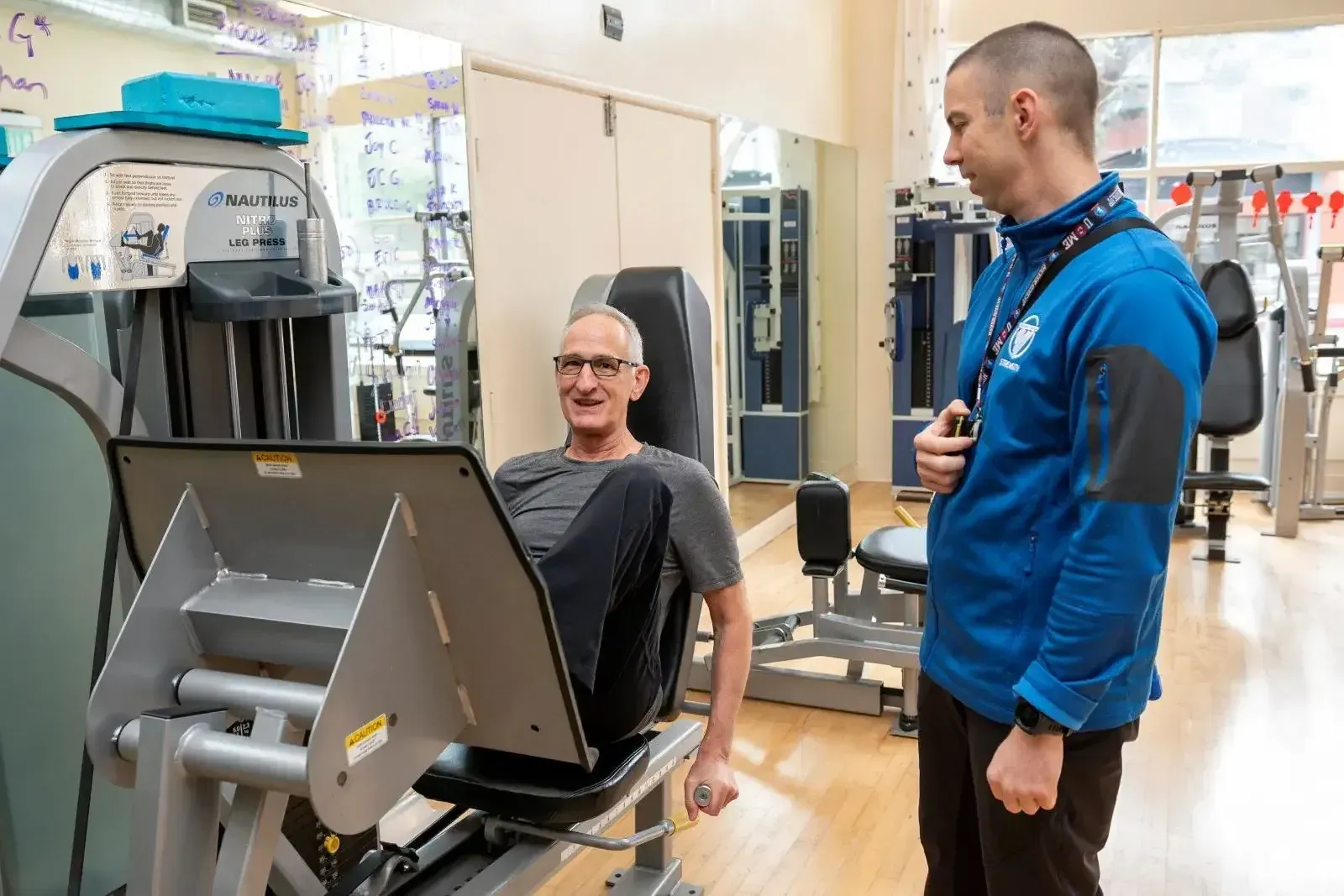
Enter the leg press.
A well-designed leg press:
- Removes spinal compression
- Stabilizes the torso
- Allows deeper, controlled range of motion
- Keeps knees tracking safely over the ankles
- Lets you train closer to true muscular fatigue
Translation:
More stimulus to the legs. Less unnecessary risk to the spine.
"But What About Functional Training?"
Let's clear this up.
"Functional" means it does what you need it to do.
If your goal is:
- Build muscle
- Increase strength
- Stay pain-free
- Maintain independence
Then the most "functional" exercise is the one that gets you there safely and consistently.
For most adults training in Rockridge, North Berkeley, and the greater Oakland area, that's not a max-effort barbell squat.
Are Squats Bad? No.
Let's be clear:
If you:
- Love squatting
- Compete in powerlifting
- Have great mechanics
- Stay pain-free
Then squat.
No problem.
But let's kill the idea that:
"You HAVE to squat to build strong legs."
You don't.
Not even close.
The Real Goal: Stimulus Without Stupidity
The body responds to progressive resistance, not tradition.
Whether it's:
- Leg press
- Belt squat
- Hack squat
- Split squat variations
If you can:
- Load it progressively
- Control the movement
- Train to meaningful fatigue
You're in business.
TAKU's NOTE
After decades of coaching—from everyday clients in Oakland to elite athletes around the world—I can tell you this:
The best exercise is the one that delivers results with the least risk.
For most people?
That's not the barbell squat.
It's a smarter, more controlled lower body movement that:
— Eliminates weak links
— Protects the spine
— Maximizes muscular output
Frequently Asked Questions
Do I need to squat to build strong legs?
No. Strength is built through progressive resistance. The squat is one option—not a requirement.
Is the leg press "cheating"?
No. It's a tool that removes unnecessary limitations so you can better target the legs.
Are barbell squats dangerous?
Not inherently—but they carry higher risk under fatigue, especially for:
- Older adults
- Taller individuals
- Those with back issues
What's better for longevity: squats or machines?
For most people, machines win due to:
- Stability
- Lower injury risk
- Better fatigue management
What do you recommend at TNT Strength in Oakland?
We prioritize:
- Safety
- Efficiency
- Progressive overload
That usually means machine-based lower body training, tailored to the individual.
References
- Schoenfeld, B.J. (2010). The mechanisms of muscle hypertrophy and their application to resistance training. Journal of Strength and Conditioning Research.
- Fisher, J., Steele, J., & Smith, D. (2017). High- vs low-load resistance training: Implications for muscle hypertrophy. Sports Medicine.
- Steele, J. et al. (2014). Resistance training to momentary failure improves strength outcomes. Journal of Sports Medicine.
- McGill, S.M. (2007). Low back disorders: Evidence-based prevention and rehabilitation. Human Kinetics.
- Contreras, B. et al. (2016). A comparison of gluteus maximus activation between barbell squat and machine-based movements. Journal of Applied Biomechanics.
If you're training in Oakland, Rockridge, or North Berkeley and want to get stronger without beating up your joints, you don't need more tradition…
You need better strategy.
Truth. Not Trends.
Experience the TNT Strength difference with a free workout.
START YOUR FITNESS TRANSFORMATION WITH A
FREE WORKOUT
Complete the form and we'll set up an appointment for you.
Recent Articles