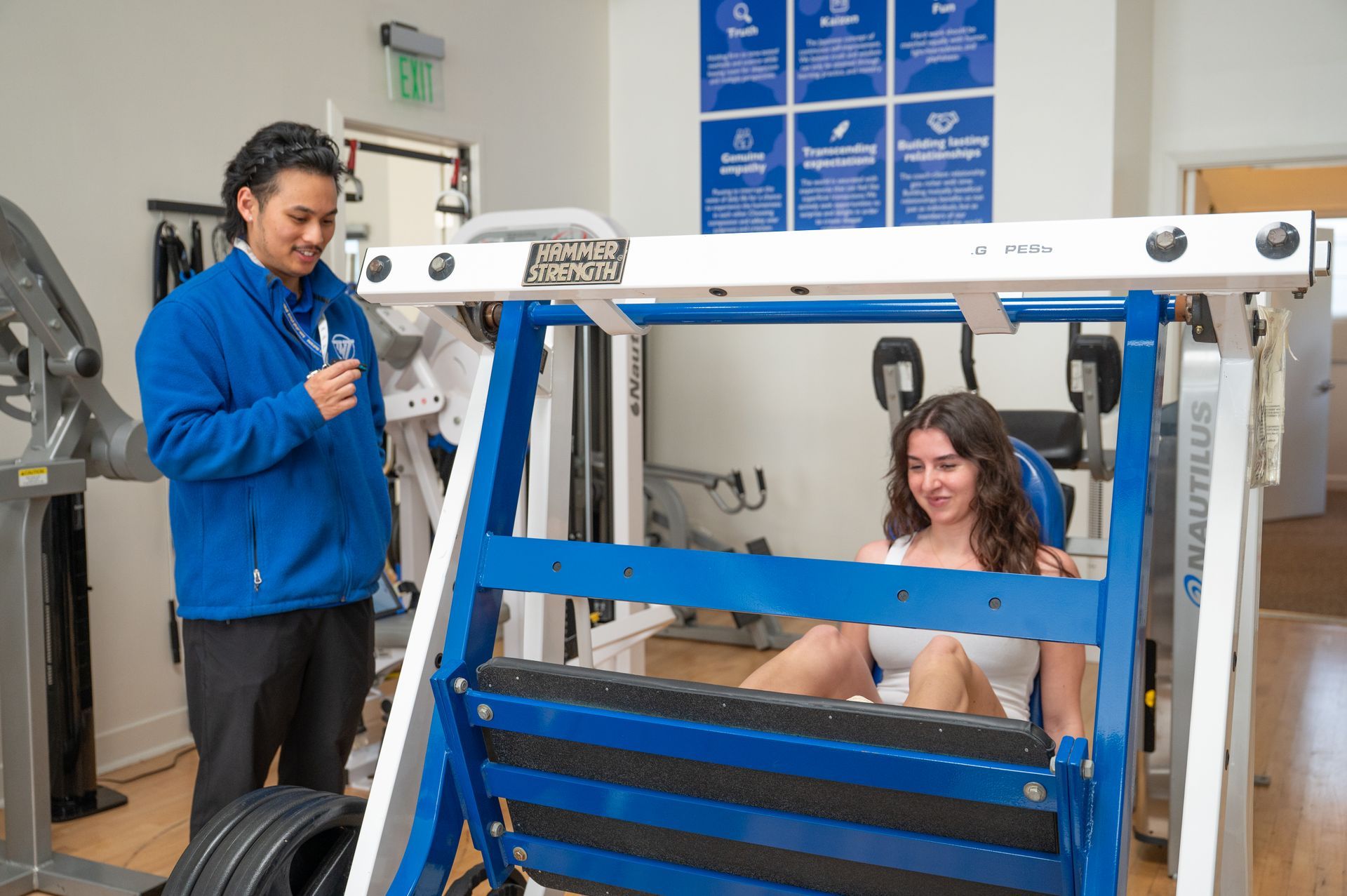
Strength Training During Menopause: A Muscle-Saving Survival Guide
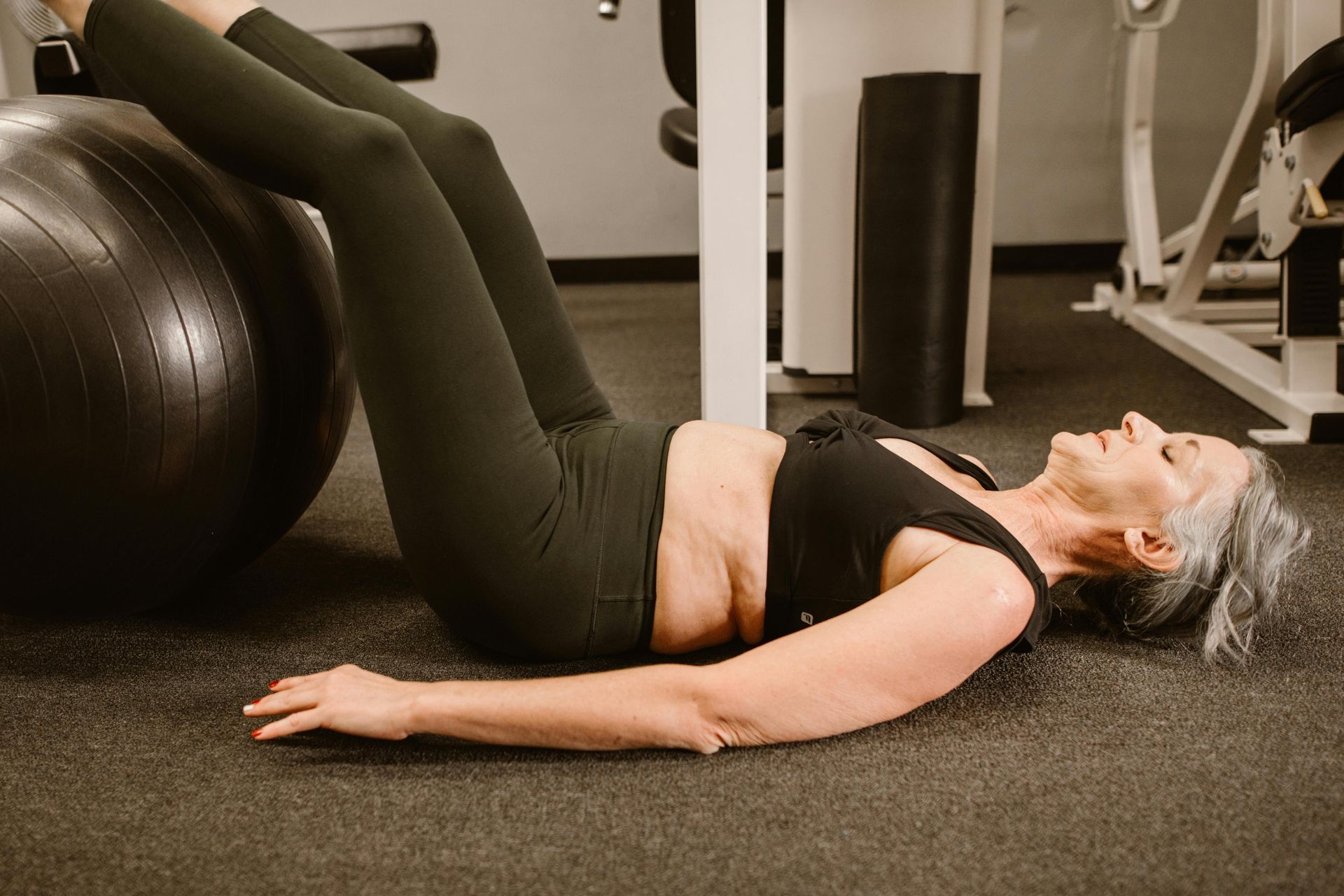
Estimated time to read: ~10–12 minutes
TL;DR
Menopause doesn't mean weakness—it's a call to strength. As estrogen drops, women are more vulnerable to muscle and bone loss, fat gain, and reduced energy. The best defense? Strength training, protein-rich nutrition, and consistent recovery. At TNT Strength here in Oakland's Rockridge District, we specialize in helping women navigate this life stage with safe, time-efficient, high-intensity resistance workouts that rebuild strength, confidence, and vitality. Two to three focused sessions per week are all it takes to stay lean, strong, and unstoppable.
Let's cut to the chase: menopause is not a sentence. It's a biological transition that throws a bunch of uncomfortable curveballs—hot flashes, sleep wrecking, mood swings—and, crucial for us strength nerds, changes in hormones that make muscle and bone maintenance harder. But here's the good news: strength training is the single most reliable tool in your toolbox to fight fat gain, preserve muscle, protect bone, and stay capable and confident well into your 60s, 70s and beyond. This guide tells you what's going on, why lifting matters, and how to train smart during peri- and post-menopause so you don't become "fragile" — you stay strong.
What's Changing in Your Body (Short and Blunt)
Menopause lowers circulating estrogen (especially estradiol). That loss affects metabolism, fat distribution (hello, belly fat), bone density, tendon health, and skeletal muscle — increasing the risk of sarcopenia (age-related muscle loss). The hormonal drop doesn't doom you, but it does make the cost of doing nothing much higher. In plain terms: without stimulus and adequate protein, muscle shrinks, fat creeps up, bones weaken, and everyday tasks get harder. (Frontiers)
Why Strength Training Is the Survival Tactic
Strength work directly counteracts the things menopause makes harder:
- Muscle preservation and growth — progressive resistance stimulates muscle protein synthesis and helps maintain or increase lean mass.
- Fat control — muscle is metabolically active tissue; more muscle helps preserve resting metabolic rate and manage fat gain, especially visceral fat that tends to increase after menopause.
- Bone health and fall prevention — mechanical loading from resistance and impact work stimulates bone and improves balance and power, lowering fracture risk.
- Function and quality of life — stronger muscles = easier daily living, less disability, and better overall health metrics. Multiple recent systematic reviews and trials show resistance training improves function, reduces some menopausal symptoms, and benefits cardiometabolic markers. (PubMed)
What About Hormone Replacement Therapy (HRT)?
HRT can help some menopausal symptoms and may have small beneficial effects on muscle or amplify training gains in some studies — but the evidence is mixed. HRT is not a free pass to skip training; it should be considered part of a broader plan and discussed with a clinician who knows your risks and goals. Practically: strength training is the backbone; HRT is a possible supplement for symptom control and, in some cases, may complement training. (Lippincott Journals)
A Practical Program (No Fluff, Just What Works)
Adopt these principles and you'll get the lion's share of the benefit.
1. Frequency — 2–3 Sessions/Week
Aim for 2 (ideal for most), 3 (often ambitious over the long haul). Consistency beats perfect programming.
2. Compound Movements First
Leg Press or Squat variants (sit-to-stand, goblet), hip hinges (deadlift variations, kettlebell swings), push (bench/press/pushups), pull (pulldowns, rows, assisted/chin variations), loaded carries. These move you through big ranges and load multiple joints — maximum "bang for buck."
3. Sets, Reps, Intensity — Progressive and Heavy Enough to Matter
- All levels: 1 set per exercise, 2–3 sets per muscle group of 8–12 reps per exercise.
- Load: choose a resistance that makes the last 1–3 reps extremely challenging but safe. Progressive overload (more weight, more reps, or more TUT* over weeks) is the key driver of muscle and strength. Don't flirt with injury — use good form and full control.
- Progression: When you can exceed 8–12 reps or 45–90 seconds of hard work, add weight.
4. Tempo, Time Under Tension, and Controlled Eccentric Work
Slow, controlled lowering (eccentric) phases produce strong adaptations in muscle and tendon health. Control beats reckless reps.
5. Prioritize Protein and Recovery
Aim for roughly 0.75–1.0 g/lb/day of protein (or higher if you're losing weight), spaced across meals. Protein + resistance training is synergistic for muscle maintenance. Sleep, manage stress, and hydrate — recovery is where gains happen.
6. Add Bone-Targeting Variety
Include some higher-impact or higher-loading sessions for bone (if joints allow): controlled step-ups, heavy loaded carries. If impact is limited by joint pain, heavier, slower lifts and even weighted vest walking* may help.
7. Progress Monitoring
Track progress with functional benchmarks: stand-to-sit time, carry distance and weight, number of bodyweight pushups or single-leg stands. Track load (weights lifted) — if your training numbers rise, you're winning.
Sample Strength Training Programs (A & B)
You can use these as a two-day full-body rotation or as an upper/lower split depending on your schedule. Alternate A and B sessions across the week.
Option 1: Full-Body A & B
Workout A
- Leg Press or Goblet Squat — 3×8–10
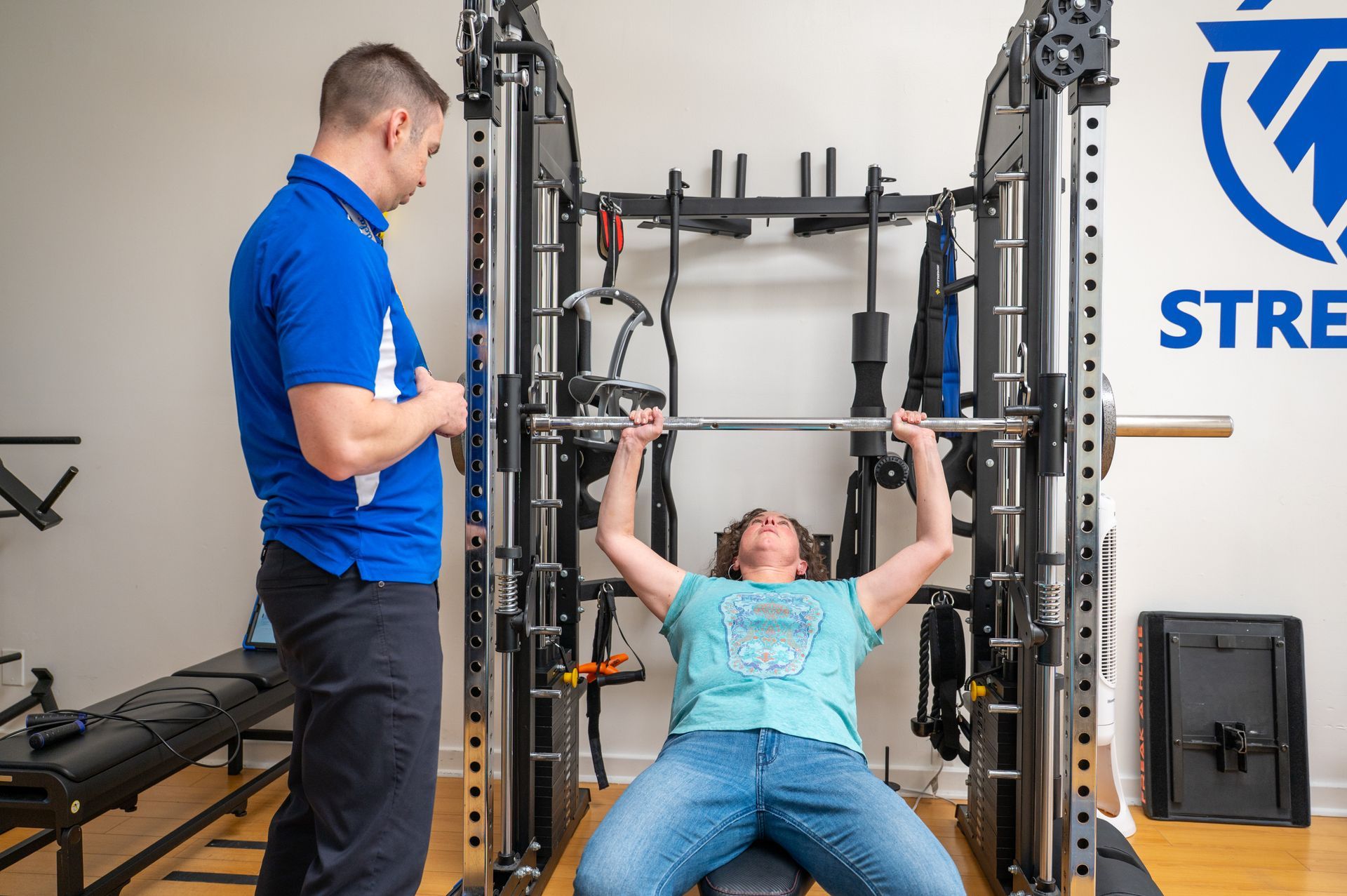
- Pushups or Dumbbell / Machine Chest Press — 3×8–10
- Band, machine Seated Row or One-Arm Dumbbell Row — 3×8–10
- Dumbbell, banded or Barbell Romanian Deadlift — 3×8
- Farmer Carry — 3×30–60s
- Plank Hold — 3×30s
Workout B
- Banded, Barbell, Trap Bar Deadlift or Kettlebell Deadlift — 3×6–8
- Step-Up or Split Squat — 3×8 each
- Banded, machine Overhead Press or Dumbbell Shoulder Press — 3×8–10
- Lat Pulldown or Assisted Chin-Up — 3×8–10
- Loaded Carry or Suitcase Carry — 3×40–60s
- Side Plank or Bird-Dog — 3×30s each side
Alternate A and B workouts 2–3 times per week (e.g., A–B–A or A–B–A–B). Focus on controlled form, steady progression, and full recovery.
Option 2: Upper/Lower Split
Lower Body (Workout A)
- Leg Press or Goblet Squat — 3×8–10
- Romanian Deadlift or Glute Bridge — 3×8
- Step-Up or Lunge — 2×10 each
- Calf Raise — 2×12–15
- Farmer Carry — 3×30–60s
- Core Plank or Dead Bug — 3×30s
Upper Body (Workout B)
- Incline Dumbbell Press — 3×8–10
- Seated Cable or Dumbbell Row — 3×8–10
- Overhead Press — 3×6–8
- Band Pull-Apart or Reverse Fly — 2×15
- Loaded Carry (Suitcase or Overhead) — 3×40–60s
- Side Plank or Pallof Press — 3×30s
Choose whichever format fits your week. Both will preserve lean mass, strengthen bones, and keep your metabolism humming.
If you're local to Rockridge, Montclair, North Berkeley, or the greater Oakland and East Bay area, TNT Strength offers personalized, private training designed for women in every life stage. You'll find our Rockridge studio just a short walk from College Avenue — right in the heart of the neighborhood — as well as our North Berkeley location serving clients just minutes from Shattuck Avenue and the Gourmet Ghetto. At both locations, we help clients build muscle, confidence, and resilience one efficient session at a time.
Safety & Sanity Tips
- Get medical clearance if needed — especially with osteoporosis or cardiovascular conditions.
- Prioritize good form and controlled range.
- Train hard enough to challenge yourself, but never at the expense of safety.
- Track your progress — strength is measurable proof that your efforts are working.
TAKU's NOTE: Fight for Your Muscle Like Your Future Depends on It — Because It Does
Menopause shifts biology, but it does not remove agency. Strength training is the single most powerful, scientifically supported intervention to slow muscle loss, blunt fat gain, protect bone, and preserve function. Add focused protein, sensible recovery, and — if appropriate — medical conversations about HRT, and you've got a plan that keeps you strong, capable and living life on your terms.
You don't get weaker because you're "meant" to. You get weaker because you stop asking your muscles to be strong. Keep asking. Keep lifting.
— Liam "TAKU" Bauer
TNT Strength | Rockridge, Oakland, CA
Helping real people build strength for life.
FAQ: Strength Training & Menopause
Q1: How soon will I see results from strength training during menopause?
Most women start noticing improvements in energy, sleep, and strength within 4–6 weeks of consistent training. Visible muscle tone and fat loss typically follow after 8–12 weeks.
Q2: I've never lifted before. Can I start during menopause?
Absolutely. Strength training is scalable for any fitness level. At TNT Strength in Oakland, we specialize in safe, beginner-friendly sessions that meet you where you are — no intimidation, no crowds.
Q3: Do I need to train at a gym?
No — you can train effectively at home with minimal equipment. But having a structured program and guidance from experienced coaches (like our TNT Strength team in Rockridge) can accelerate progress and help you stay consistent.
Q4: What's more important — diet or exercise?
Both matter, but for maintaining muscle and metabolic health post-menopause, resistance training plus adequate protein intake are the cornerstones.
Q5: Can strength training reduce hot flashes or mood swings?
Some women report fewer or less intense symptoms when they train regularly. Exercise supports hormonal balance, stress reduction, and better sleep — all of which help regulate menopausal symptoms.
References
- Geraci A., et al. "Sarcopenia and Menopause: The Role of Estradiol." Frontiers in Endocrinology , 2021.
- Buckinx F., et al. "Sarcopenia in Menopausal Women: Current Perspectives." Aging-related review (PMC), 2022.
- Sá KMM, et al. "Resistance training for postmenopausal women" (systematic reviews/meta-analyses, 2023). PubMed.
- Javed AA., et al. "Association Between Hormone Therapy and Muscle Mass." JAMA Network and Menopause Meta-Analysis, 2020.
- Dam TV., et al. "Transdermal Estrogen Therapy Improves Gains in Skeletal Muscle in Response to Resistance Training." Frontiers in Physiology , 2021.
*Read my Rucking article to learn more about this activity.
Experience the TNT Strength difference with a free workout.
START YOUR FITNESS TRANSFORMATION WITH A
FREE WORKOUT
Complete the form and we'll set up an appointment for you.
Recent Articles