Why Getting Stronger Helps Everything—But Doesn't Replace Practice
Estimated Reading Time: 9–11 minutes
TL;DR — Too Long; Didn't Read
- Your body adapts specifically to what you train—this is the SAID Principle .
- Strength is a general ability that supports nearly all physical tasks.
- Skills are specific and must be practiced directly.
- A stronger body can enhance performance—but it doesn't automatically create skill.
- Positive, negative, and neutral transfer explain why some things carry over—and most don't.
- Add weight to a skill? It becomes a different skill. Add enough weight? It becomes exercise.
- At TNT Strength, we are Tool Agnostic —because strength transfers, even if specific skills do not.
The Missing Distinction Most People Never Learn
Walk into almost any gym—whether you're here in Oakland Rockridge or over on North Berkeley's Shattuck Ave —and you'll hear two competing ideas:
- "Everything carries over to everything."
- "Nothing carries over—skills are everything."
Both miss the mark.
Here's the truth:
Strength is general.
Skills are specific.
And if you don't understand that, your training will always be inefficient.
The SAID Principle Still Rules Everything
The SAID Principle —Specific Adaptation to Imposed Demands—still applies:
You get better at what you do.
- Practice a tennis serve → better tennis serve
- Practice a squat → better squat
- Practice a BJJ escape → better escape
But here's the nuance:
Adaptations are specific…
…but the capacity you build can be general.
That capacity is strength .
Strength: The Foundation Under Everything
Strength is not a skill.
It's an ability—a general quality of the organism.
Think of it like this:
Strength is the engine.
Skill is the driver.
A bigger engine gives you:
- More force
- More speed potential
- More resilience
But it does not teach you how to drive.
You still need skill for that.
Skills vs. Abilities: A Clean Separation
Abilities (General)
- Strength
- Power
- Endurance
- Mobility
These improve your capacity.
Skills (Specific)
- Golf swing
- Tennis serve
- BJJ technique
- A specific lifting pattern
These are learned motor patterns.
Strength supports skills.
Skills express strength.
Even Strength Training Has a Skill Component
Here's where this gets subtle—and important.
Every exercise has some skill component. Let's take a simple example:
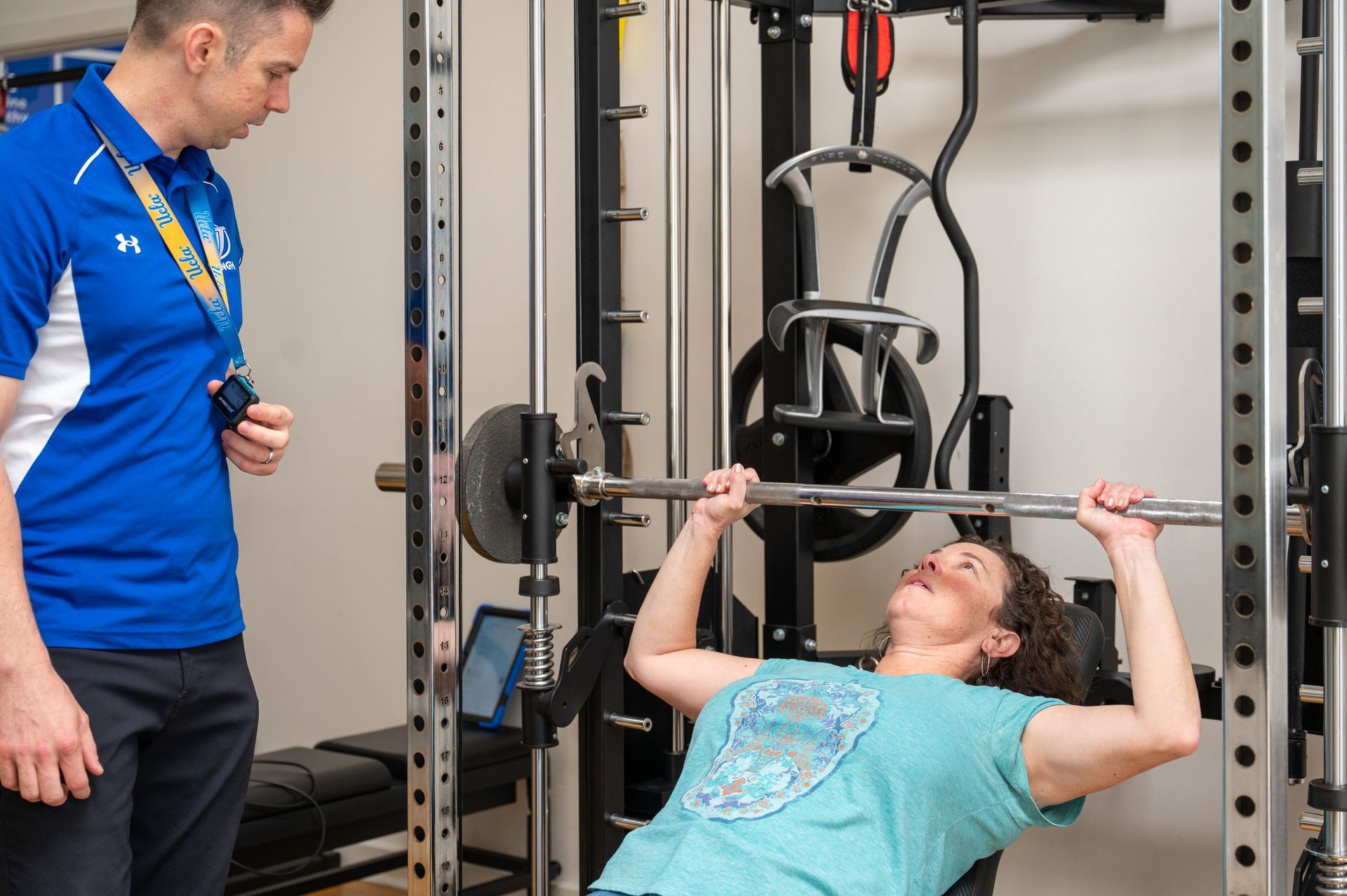
- Barbell Bench Press
- Dumbbell Bench Press
- Machine Bench Press
Are they the same? No.
Each one requires:
- Different stabilization
- Different coordination
- Different motor patterns
They are three distinct skills.
You can be highly skilled at a barbell bench press and feel awkward with dumbbells. Or strong on a machine and less efficient with a barbell.
That's skill specificity .
But Strength Still Transfers
Now here's the part most people miss:
The strength you build using any of those tools still transfers—generally.
If you increase your ability to produce force in the chest, shoulders, and triceps:
- You've increased your general strength capacity
- That capacity can be applied to many tasks
Even if the skill doesn't perfectly transfer, the ability does.
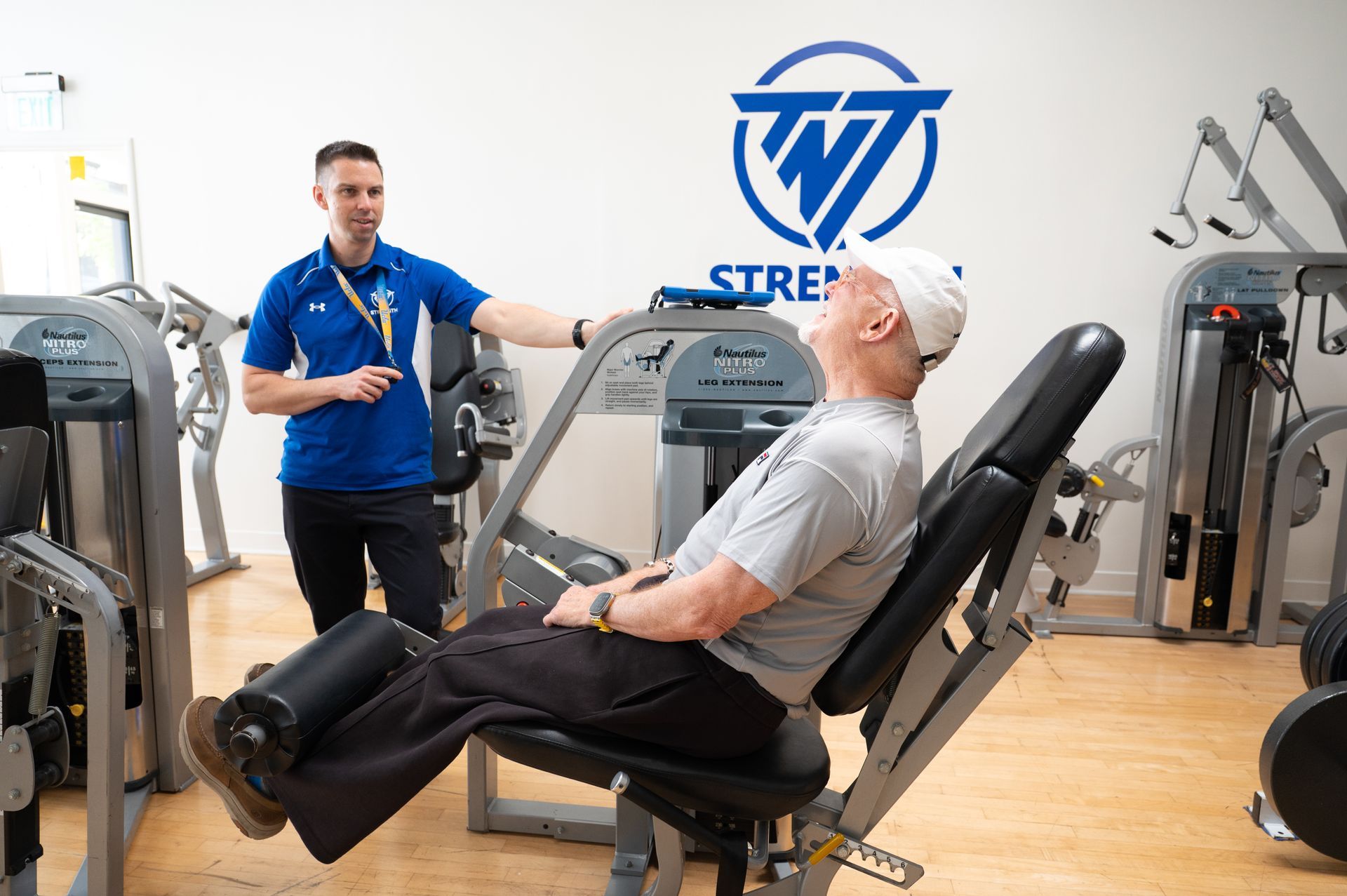
This Is Why We Are "Tool Agnostic" at TNT Strength
At TNT Strength, we don't worship tools.
We don't argue about:
- Barbells vs. dumbbells
- Machines vs. free weights
Because that debate misses the point.
The tool is just a means to an end.
The goal is: Increase strength safely and effectively.
If a machine allows you to:
- Apply more force
- Maintain better control
- Reduce injury risk
Then it's a great tool. If dumbbells or barbells do that for you? Great.
Tool Agnostic Defined
We choose the tool that best allows you to safely apply maximum effort and build strength.
Because:
- Skills are tied to the tool
- Strength is not
Motor Learning: Why Skill Still Has to Be Practiced
Motor learning research is clear:
Learning is highly specific to the conditions in which it occurs.
So while strength transfers broadly… skill does not.
You still need to practice:
- The exact movement
- The exact timing
- The exact coordination
Transfer of Learning: What Actually Carries Over
Positive Transfer (Helpful)
Strength increases → greater performance potential
Negative Transfer (Harmful)
Poor technique → ingrained bad habits
Neutral Transfer (No Effect)
Random "functional" exercises with no clear goal
When You Add Load, You Change the Skill
A bodyweight movement is one thing.
Add resistance? It becomes a new skill.
Add enough resistance? It becomes strength training —focused on building capacity, not just refining coordination.
Skill Practice vs. Strength Training
Skill Practice
- Precision
- Low fatigue
- High repetition
- Movement-focused
Strength Training
- High effort
- Progressive overload
- Muscle-focused
- Capacity-building
At TNT Strength, we focus on the latter—because it gives you the foundation for everything else.
Why This Matters (Especially After 40)
If you're training in Oakland Rockridge or North Berkeley , your goals likely include:
- Staying independent
- Preventing injury
- Maintaining muscle
- Living fully
Here's the truth:
Strength is the foundation of all of that.
And it doesn't matter whether you build it with machines, dumbbells, or barbells.
What matters is that you build it.
What We Do at TNT Strength
At our studios in:
- Oakland Rockridge
- North Berkeley (Shattuck Ave)
We focus on:
- Building maximum strength safely and efficiently
- Using controlled, precise movements
- Applying progressive overload
- Choosing the right tool for the job
No dogma. No gimmicks.
Just results.
FAQ
Q: Does it matter which equipment I use?
Yes—for skill. No—for general strength development, assuming sufficient intensity and effort.
Q: Why do I feel stronger on one tool vs another?
Because skill and familiarity differ—even if your underlying strength is improving.
Q: Should I train with multiple tools?
You can—but it's not required. Strength can be built effectively with many different tools.
Q: What does "tool agnostic" really mean?
We don't care how you build strength—only that you do it safely and effectively.
Q: What's the simplest takeaway?
Build strength (engine). Practice skills separately (driving). Don't confuse the two.
TAKU's Note
The fitness industry loves to complicate things.
But this is simple:
Skills are specific.
Strength is general.
Tools are optional.
Build the engine.
Then go learn how to drive it.
If you're ready to stop chasing tools—and start building real strength—come see us. We'll meet you where you are and help you get stronger for life.
References
- Stone, M.H. et al. (2007). Strength and conditioning and performance
- Suchomel, T.J. et al. (2016). The importance of muscular strength
- Schmidt, R.A. & Lee, T.D. (2011). Motor Learning and Performance
- Thorndike, E.L. & Woodworth, R.S. (1901). Transfer of training
- Seidler, R.D. (2010). Neural correlates of motor learning
- Sattelmayer, M. et al. (2016). Motor learning principles
- Behm, D.G. & Sale, D.G. (1993). Intended vs actual movement velocity and training specificity
Experience the TNT Strength difference with a free workout.
START YOUR FITNESS TRANSFORMATION WITH A
FREE WORKOUT
Complete the form and we'll set up an appointment for you.
Recent Articles