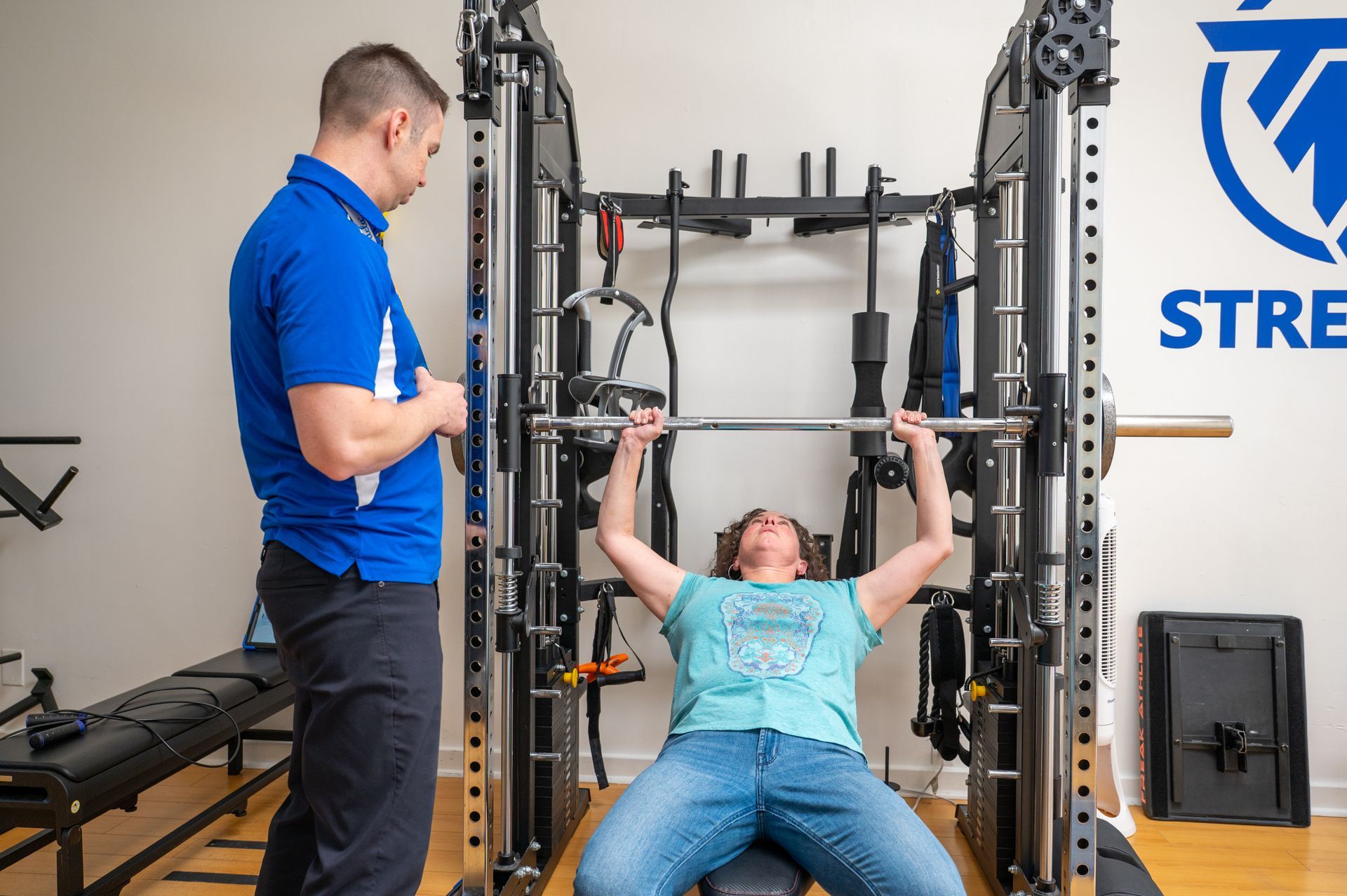
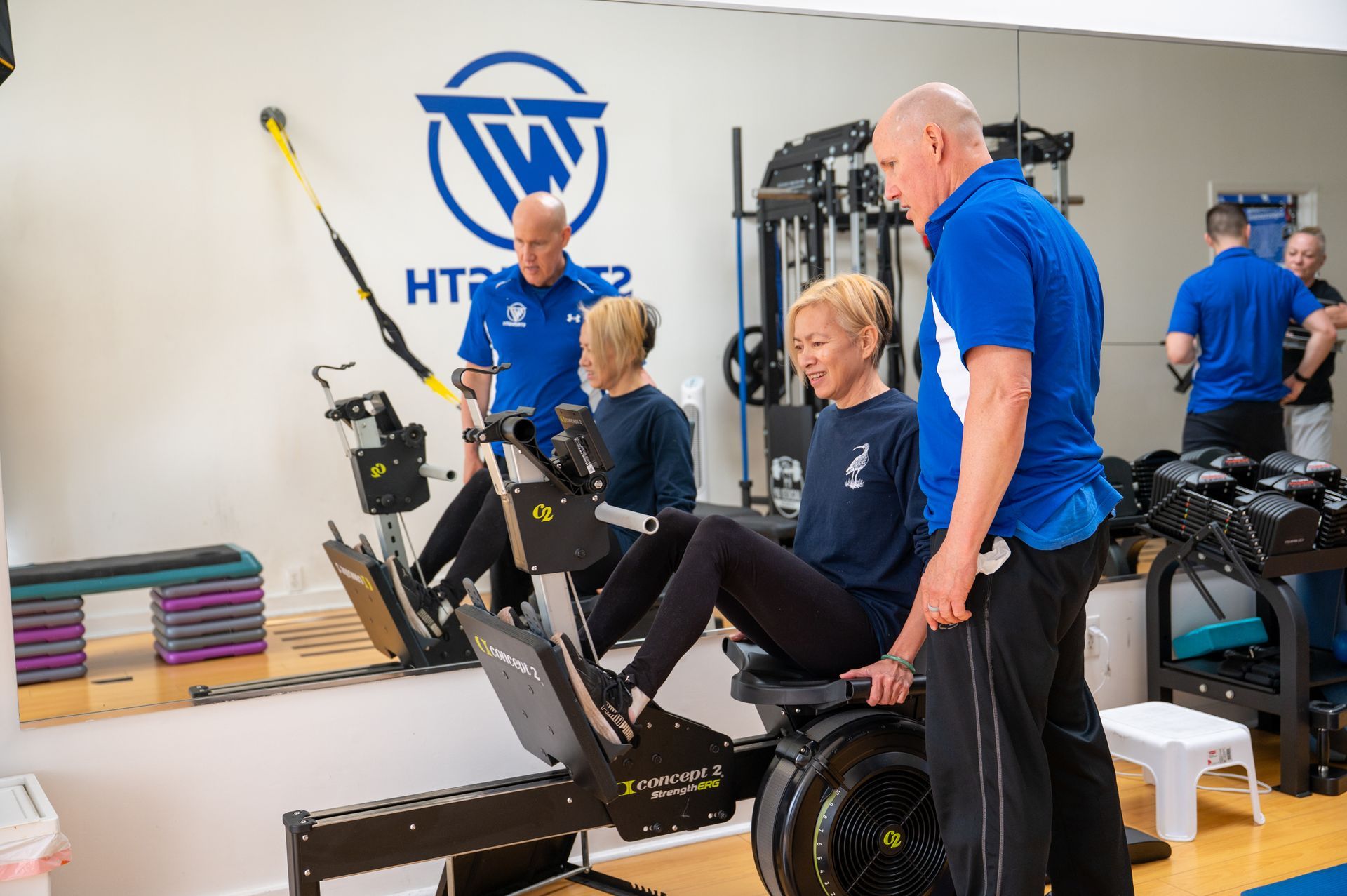
Minimal Effective Dose vs. Maximum Recoverable Volume: Why Less Is Often Best for Strength Training
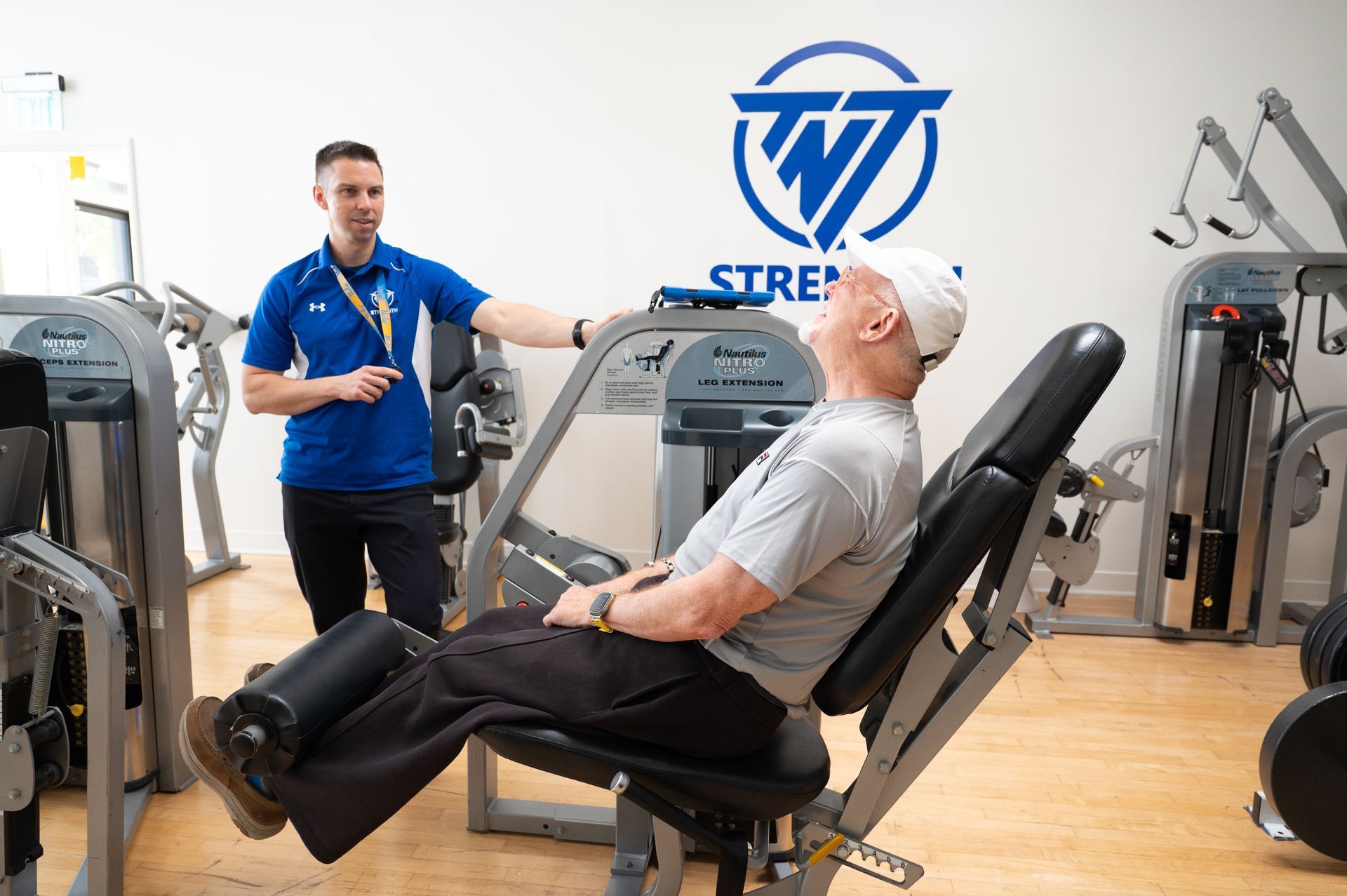
Estimated Read Time: 8 minutes
TL;DR
At TNT Strength, we believe progress doesn't come from doing more—it comes from doing enough. The Minimal Effective Dose (MED) approach delivers maximum results with minimal wasted effort. Training to stimulate, not annihilate, leads to better recovery, fewer injuries, and long-term progress. You'll get stronger, fitter, and healthier by focusing on quality, not quantity.
If you live in or near Oakland's Rockridge District , North Berkeley , College Avenue , Temescal , or Piedmont , this approach is tailor-made for your busy lifestyle—short, efficient sessions that fit your schedule and still deliver incredible results.
In the world of strength training, debates rage about how much work is enough.
Some argue for piling on volume—more sets, more days, more sweat. Others prefer to do just enough to move the needle and then recover fully before doing it again.
At TNT Strength, with locations serving Oakland's Rockridge District and North Berkeley, we live by one simple truth: the goal is progress, not punishment. That's why we favor the Minimal Effective Dose (MED) approach. It's not about doing less for the sake of laziness—it's about doing exactly what's needed to produce results, and nothing more.
What Is the Minimal Effective Dose (MED)?
The Minimal Effective Dose is the smallest amount of exercise stimulus required to produce a positive adaptation—stronger muscles, better fitness, improved health.
Think of it like medication: the right dose heals you; more isn't better—it's just harder on your system. The same logic applies to training. When you give your body a clear, intense signal, it adapts. Once you've done that, doing more doesn't speed up results—it just eats into recovery.
The Other Side: Maximum Recoverable Volume (MRV)
At the other end of the spectrum is the Maximum Recoverable Volume (MRV) —the most exercise you can handle and still recover from. Training near MRV can have its place for advanced athletes chasing peak performance.
But for the vast majority of people—busy adults, older trainees, or anyone who values long-term consistency over short bursts—training that close to the edge is a recipe for burnout, injury, or stalled progress.
Recovery capacity isn't infinite. As we age, manage careers, or juggle family life across Rockridge, North Berkeley, Piedmont, Temescal, and the greater East Bay, our "recovery bandwidth" shrinks. Chasing MRV quickly becomes unsustainable.
The truth is, most people can reach their strength, health, and physique goals without ever coming close to MRV.
What the Science Says
Modern exercise science supports this balanced, efficient approach.
Schoenfeld, Ogborn, and Krieger (2017) found that while increasing volume can enhance muscle growth, the benefits diminish after a certain point—and recovery demands climb dramatically.
Ralston et al. (2017) concluded that moderate weekly training volumes produce nearly identical strength gains compared to higher volumes, especially when intensity and effort are well managed.
Baz-Valle et al. (2022) reaffirmed that quality—training close to muscular failure with proper form—is more important than sheer quantity of sets.
Put simply, beyond a modest threshold, doing more doesn't equal getting more.
Why MED Wins for Real People
For most trainees, the Minimal Effective Dose offers the sweet spot between effectiveness and sustainability. Here's why it works so well:
- It's time-efficient. Most people can get stronger and fitter in two brief, full-body workouts per week.
- It minimizes injury risk. Lower total volume means less joint wear and fewer overuse problems.
- It improves adherence. If your workouts fit your schedule and don't wreck your energy, you'll stick with them.
- It supports recovery. Proper recovery means you actually adapt to your training instead of digging a deeper fatigue hole.
- It's scalable. You can always add volume later if progress truly stalls—but you can't recover faster just by wishing it.
For people living or working in Rockridge, North Berkeley, Piedmont, Temescal, and along College Avenue, this approach is ideal. At TNT Strength, you can walk in, train hard for 30 minutes, and get out feeling stronger—no wasted time, no fluff.
How TNT Applies the MED Approach
At TNT Strength, serving Rockridge and North Berkeley, we design programs that maximize return on effort. Here's what that looks like in practice:
Beginner / Time-Efficient Client
- 2x/week full-body workouts
- 6–10 hard sets per major muscle group each week
- Focus on large, compound movements done to deep fatigue (safe, controlled failure)
Goal: Build strength, confidence, and resilience without excessive time or soreness.
Intermediate / Advanced Trainee
- 2–3x/week with 8–12 sets per major muscle group
- Periodic variation in reps, tempo, or exercise selection to avoid stagnation
- Focus on quality of effort, not chasing arbitrary numbers
Our rule of thumb: If you're progressing, don't change a thing. Only increase workload when progress stops and recovery remains strong.
How to Know You're Hitting the Sweet Spot
Ask yourself three simple questions:
- Am I getting stronger over time?
- Do I feel recovered between sessions?
- Am I looking forward to training instead of dreading it?
If the answer to all three is "yes," you're in the MED zone. Keep going.
If performance is dropping, sleep or mood are declining, or you're constantly sore—you've likely drifted too close to MRV. Pull back, rest, and reset.
TAKU's NOTE: Train Smart, Live Better
The Minimal Effective Dose isn't about minimal effort—it's about maximum return on effort. It honors the body's need for recovery, values your limited time, and aligns with real-world demands.
At TNT Strength, serving Rockridge, North Berkeley, and the surrounding East Bay, we're not here to see how much exercise you can survive—we're here to help you thrive. Whether you're a local professional balancing long workdays or an active retiree exploring Oakland's trails and hills, our approach keeps you strong, healthy, and injury-free for life.
Our philosophy is simple: train hard, train smart, recover fully, and keep getting better for decades to come.
Remember, you don't need to live in the gym to get results. In fact, the smartest lifters and coaches in the world know when to stop. Train intensely, recover deeply, and let your body do the rest—that's the TNT way.
If you're near Rockridge, North Berkeley, College Avenue, Elmwood, Temescal, Piedmont, Claremont, Kensington, Albany, or the UC Berkeley campus, stop by TNT Strength and experience how just two short, focused sessions per week can change the way you look, feel, and move.
FAQ: Minimal Effective Dose Training
Q: Can beginners really make progress training only twice a week?
Absolutely. When performed with intensity and proper form, two full-body workouts per week are more than enough to build strength and muscle for most beginners.
Q: What if I enjoy training more often?
You can, but remember: more isn't always better. If recovery, energy, and enthusiasm stay high, a third session can be beneficial—but only if it doesn't compromise recovery.
Q: How do I know if I'm training hard enough?
Each major exercise should take you close to muscular failure—where you couldn't complete another clean rep with good form. That's the signal your body needs to adapt.
Q: Is the MED approach just for older adults?
Not at all. It's effective for everyone—from busy professionals to competitive athletes—because it balances effort and recovery intelligently.
Q: What happens if I stop making progress?
First, check your sleep, nutrition, and recovery. If all are solid, you can add a small bump in training volume or intensity. But always adjust gradually.
References
Schoenfeld BJ, Ogborn D, Krieger JW. Dose–response relationship between weekly resistance training volume and increases in muscle mass: a systematic review and meta-analysis. J Sports Sci. 2017.
Ralston GW, Kilgore L, Wyatt FB, Baker JS. The effect of weekly set volume on strength gain: a meta-analysis. Sports Med. 2017.
Baz-Valle E, et al. A systematic review of the effects of different resistance training volumes on muscle hypertrophy. Front Physiol. 2022.
Experience the TNT Strength difference with a free workout.
START YOUR FITNESS TRANSFORMATION WITH A
FREE WORKOUT
Complete the form and we'll set up an appointment for you.
Recent Articles