You Don't Need 10 Hours of Exercise a Week
Estimated time to read: 10 minutes
The TNT H.I.T. + H.I.I.T. Approach to Getting More From Less
TL;DR
You may have seen the recent headlines suggesting that you need 9–10 hours of exercise every week to substantially reduce your risk of cardiovascular disease.
Before you panic and start sleeping at the gym, let’s clarify what the study actually found.
Researchers found that people accumulating approximately 560–610 minutes of moderate-to-vigorous physical activity per week had an association with greater cardiovascular risk reduction than those doing less. But that doesn’t mean you need 10 hours of structured workouts. The study measured physical activity, not 10 hours of gym sessions, and it was observational rather than a randomized exercise trial. The authors themselves say the existing 150-minute guideline remains an important universal minimum.
At TNT Strength, we look at exercise differently.
H.I.T. + H.I.I.T.
Brief, intense, infrequent strength training combined with brief, intense interval conditioning.
My starting point for a time-efficient training model is as little as three H.I.T. sessions and three H.I.I.T. sessions every two weeks, combined with regular daily movement.
That’s six purposeful training sessions in 14 days.
- Not 10 hours.
- Not seven days a week.
- Not endless cardio.
The objective isn’t to do more exercise. It’s to get more from the exercise you do.
The 10-Hour Exercise Headline
Every few years, the fitness industry gives us another number to feel guilty about.
- 10,000 steps.
- Eight hours of sleep.
- One hour of cardio.
- Three hours in the gym.
Now we’re hearing that perhaps we need 10 hours of exercise per week.
That’s a pretty effective way to make an already time-starved population decide that exercise isn’t for them.
But let’s look beyond the headline.
A 2026 study published in the British Journal of Sports Medicine examined 17,088 participants from the UK Biobank and found that cardiovascular risk continued to decline as moderate-to-vigorous physical activity and cardiorespiratory fitness increased. Meeting the current 150-minute weekly guideline was associated with approximately an 8–9% lower cardiovascular risk, while approximately 560–610 minutes per week was associated with a greater than 30% reduction.
That’s interesting.
But here’s what the headline doesn’t tell you:
The study did not prove that everyone needs 10 hours of exercise.
It examined the relationship between physical activity, fitness and cardiovascular disease risk.
That’s an important distinction.
Exercise Isn’t the Same as Physical Activity
This is where things get interesting.
Exercise is physical activity. But physical activity isn’t necessarily exercise.
- Walking to work is physical activity.
- Taking the stairs is physical activity.
- Gardening is physical activity.
- Hiking is physical activity.
- Cycling is physical activity.
- Playing with your grandchildren is physical activity.
A structured 30-minute strength workout is exercise.
A structured interval session is exercise.
They’re related, but they’re not identical.
The 2026 study measured moderate-to-vigorous physical activity. It did not tell 17,088 people to spend 10 hours every week performing structured workouts.
In fact, the researchers explicitly describe the current 150-minute guideline as a robust universal minimum and suggest their higher-volume findings should complement—not simply replace—the existing recommendations. They also acknowledge that their higher-volume targets need further validation, including through future randomized research.
So let’s stop telling people:
“You need 10 hours of exercise.”
A more accurate statement would be:
“Higher levels of physical activity and cardiorespiratory fitness are associated with greater cardiovascular protection.”
That’s a very different message.
More Isn’t Always Better
I have nothing against exercise.
I’ve been designing strength and conditioning programs since 1988.
I believe people should move.
I believe people should get stronger.
I believe people should develop their cardiovascular fitness.
And I believe that physical activity should be part of everyone’s life.
But I don’t believe that more exercise automatically equals better exercise.
Exercise produces a stimulus.
The body responds to that stimulus during recovery.
That’s the basic principle:
Stimulus → Recovery → Adaptation.
The goal isn’t to accumulate as many exercise minutes as possible.
The goal is to provide an appropriate stimulus and then give the body an opportunity to adapt.
That’s the foundation of the TNT approach.
H.I.T.: Brief, Intense and Infrequent
High-Intensity Training isn’t a new concept.
Arthur Jones understood something decades ago that the fitness industry still struggles with today:
You don’t need endless exercise volume to stimulate an adaptation.
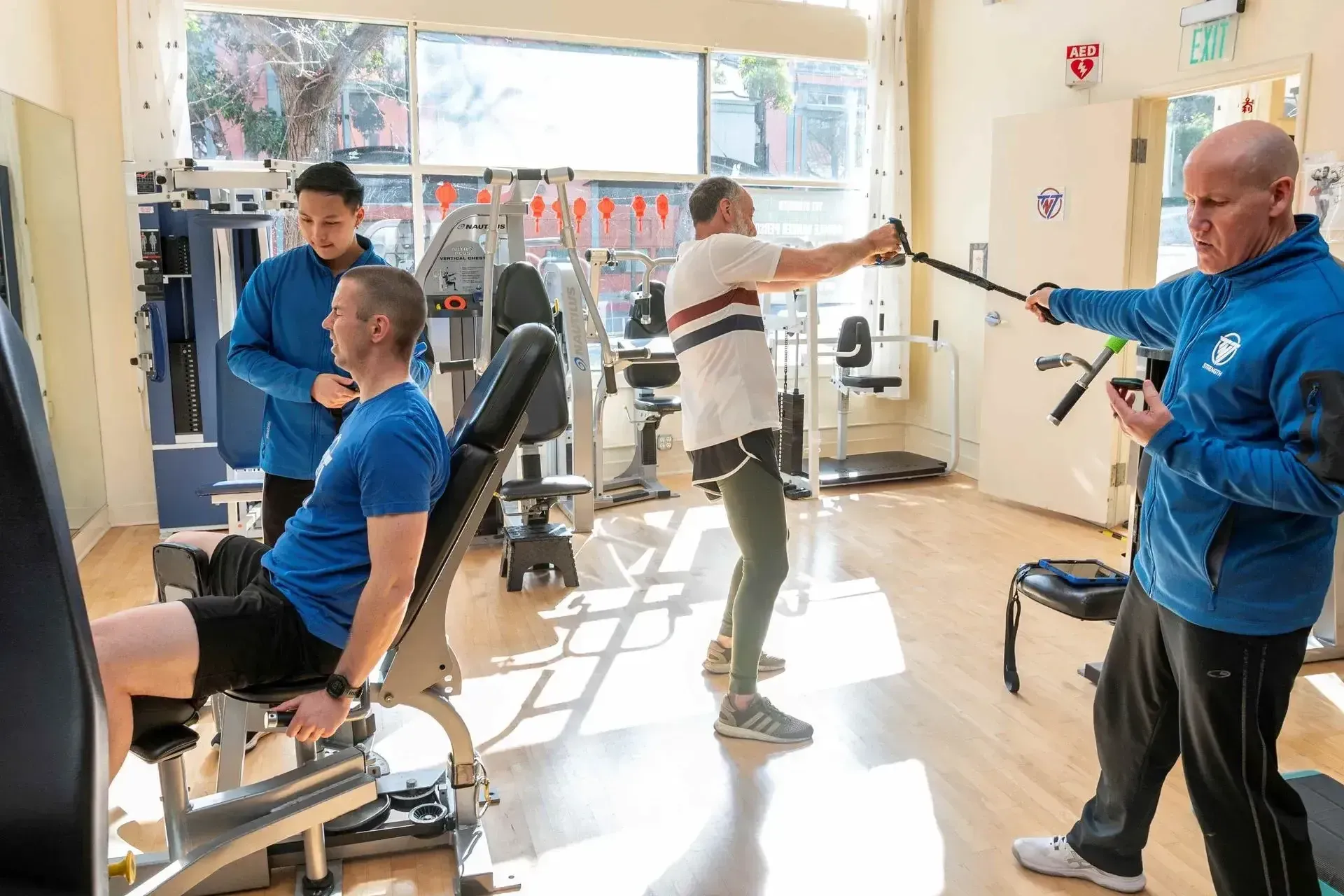
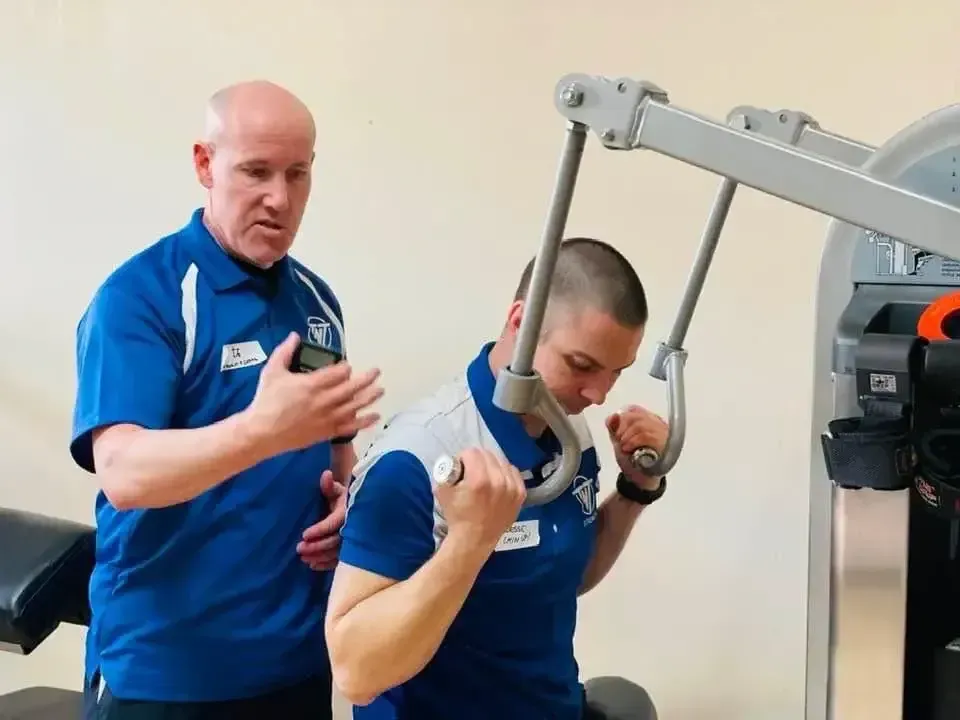
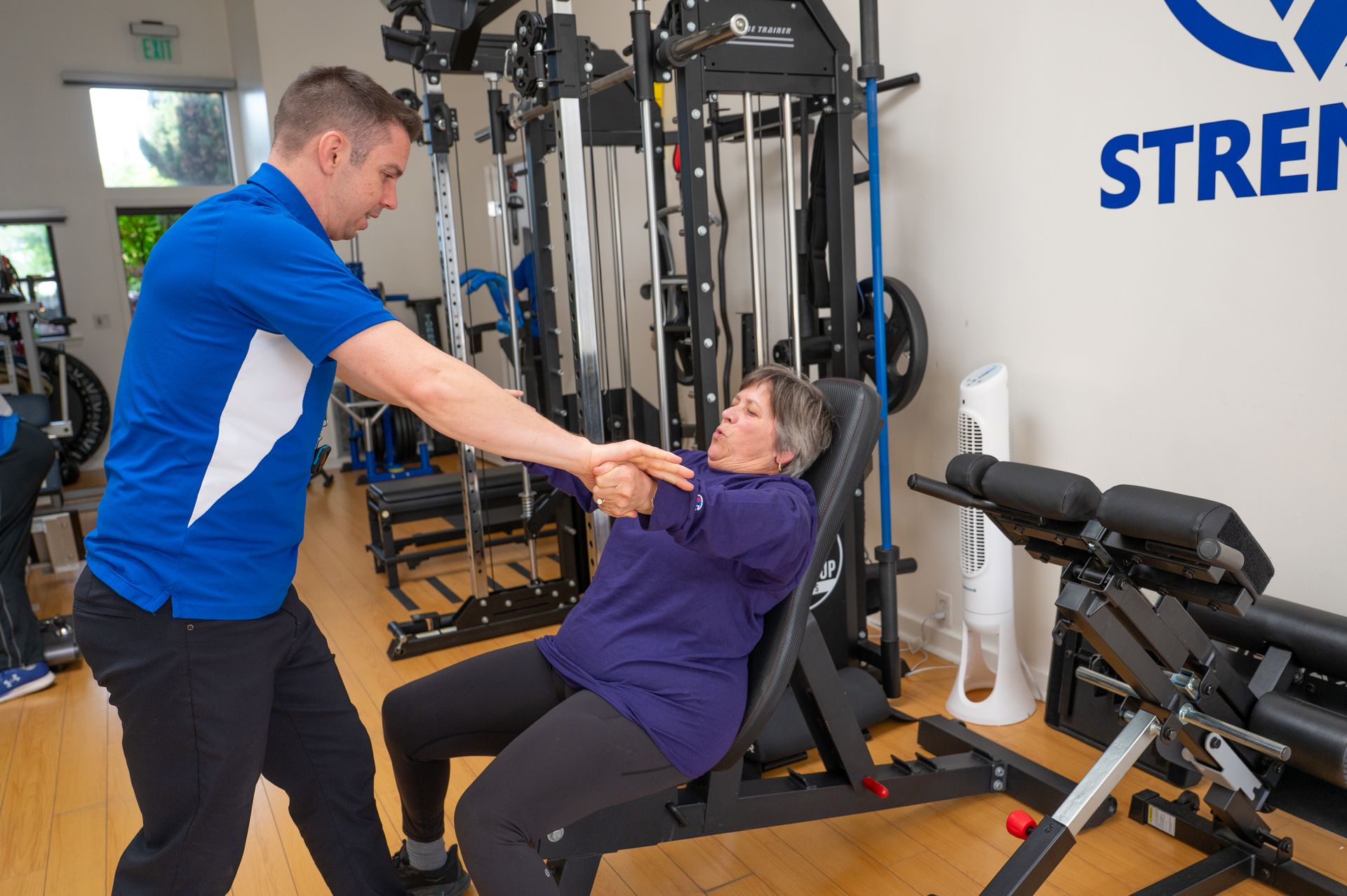
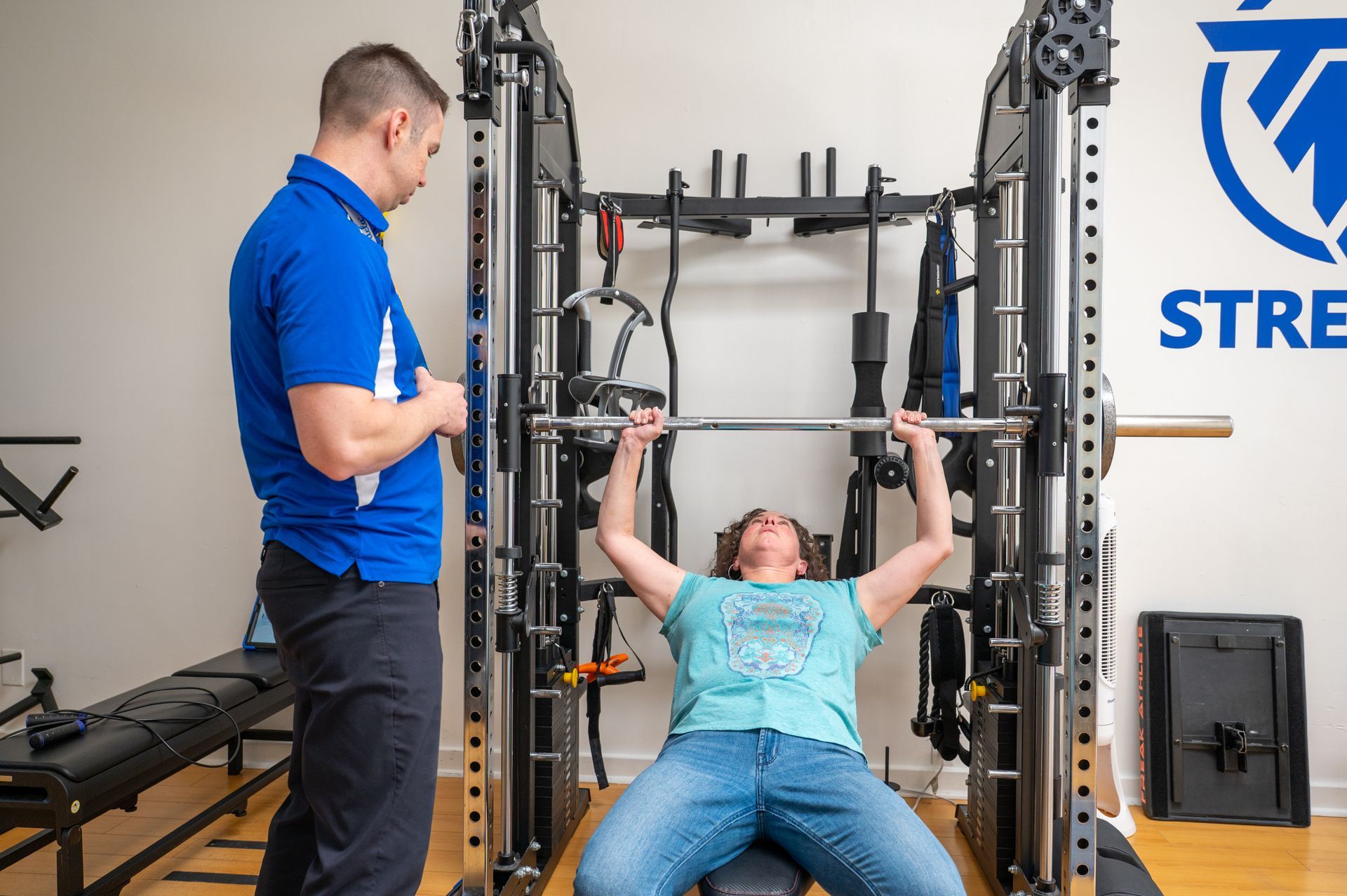
At TNT Strength, our strength-training sessions are brief, focused and demanding.
- We select exercises that efficiently train the major muscle groups.
- We use appropriate resistance.
- We emphasize controlled technique.
- We progressively increase the training stimulus.
- And we train hard.
The workout is the stimulus.
The recovery afterward is where the adaptation happens.
This is why I use the term Minimal Effective Dose .
Notice that I said effective.
I didn’t say minimal effort.
Minimal Effective Dose means:
The least amount of training necessary to produce the desired result.
Those are very different things.
A brief H.I.T. workout can be extremely demanding.
It simply doesn’t need to be long.
And the research supports the importance of resistance training without requiring marathon sessions in the gym.
A 2022 systematic review and meta-analysis found that any amount of resistance training was associated with lower all-cause, cardiovascular and cancer mortality compared with no resistance training. Its dose-response analysis suggested the greatest observed association with lower all-cause mortality occurred around 60 minutes per week, with diminishing benefits at higher volumes.
More recently, a very large 2026 analysis of 147,374 adults found that 90–119 minutes of weekly resistance training was associated with lower all-cause and cardiovascular mortality, with the observed benefits plateauing around 120 minutes per week.
Neither study proves that 60 or 120 minutes is the magic number.
That’s not how science works.
What it does demonstrate is that the relationship between training volume and health isn’t simply:
More = infinitely better.
H.I.I.T.: Train the Engine Without Living on a Treadmill
Strength is only part of the equation.
You also want a cardiovascular system capable of delivering oxygen efficiently and supporting sustained physical performance.
That’s where H.I.I.T. — High-Intensity Interval Training — comes in.
H.I.I.T. involves repeated periods of relatively intense exercise separated by recovery periods.
The advantage?
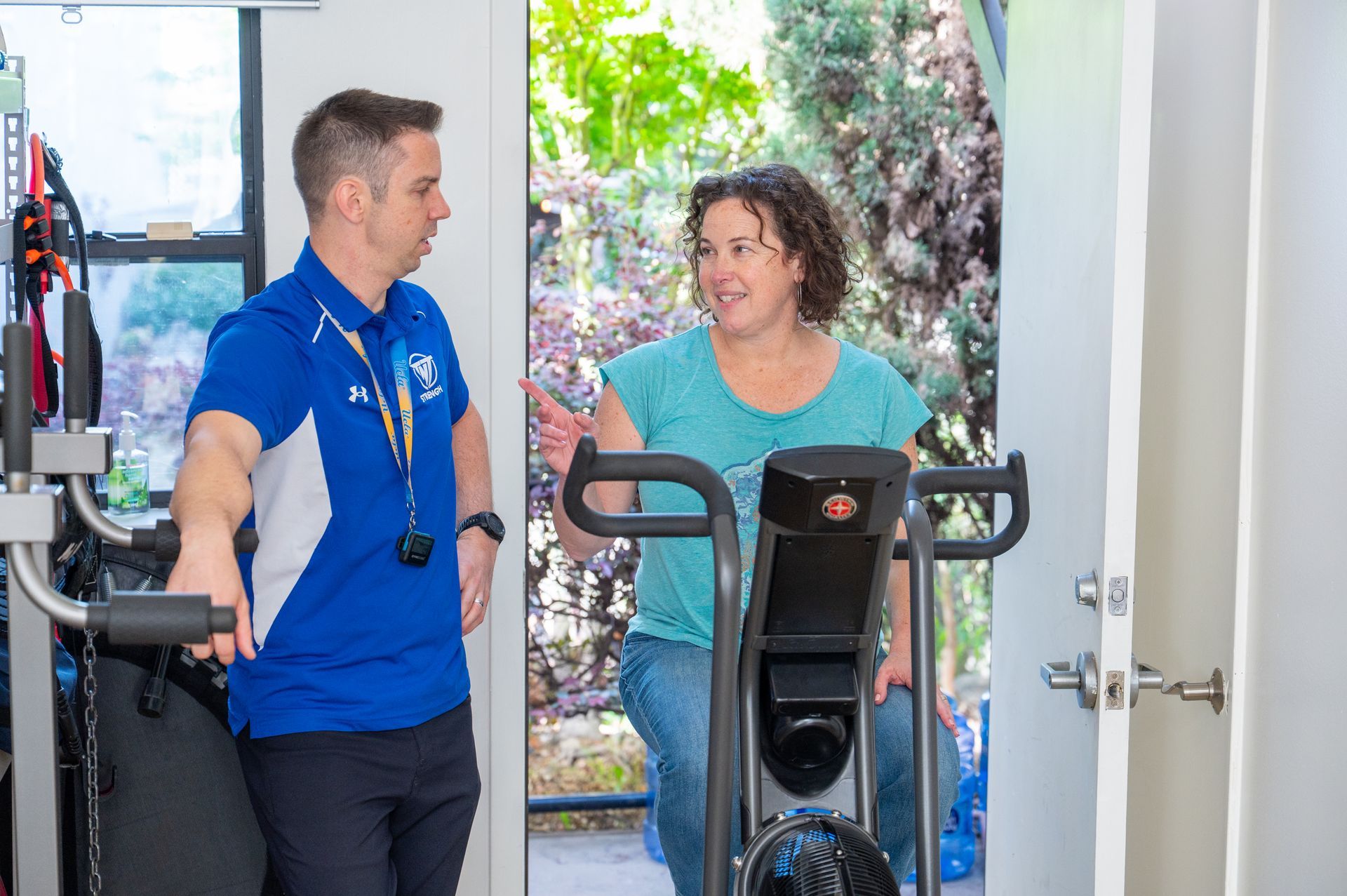
You can generate a powerful cardiorespiratory stimulus without spending hours performing moderate-intensity cardio.
A 2024 umbrella review examined 24 systematic reviews and meta-analyses representing 429 primary studies and nearly 13,000 participants.
The conclusion was remarkably consistent:
HIIT improves cardiorespiratory fitness in adults.
The benefits were seen compared with both non-exercise controls and traditional moderate-intensity continuous training. The research included healthy adults, older adults, people with overweight or obesity, athletes and several different HIIT formats, including low-volume protocols.
That’s important.
Because it demonstrates that cardiovascular training doesn’t necessarily require:
“Get on the treadmill for an hour.”
Sometimes the better question is:
“What’s the smallest effective dose that produces the adaptation we’re after?”
The TNT H.I.T. + H.I.I.T. Model
This is where we put everything together.
My proposed TNT starting point is:
Three H.I.T. sessions every two weeks
PLUS
Three H.I.I.T. sessions every two weeks
That’s six purposeful training sessions over 14 days.
Depending upon the individual and program, a H.I.T. session might take approximately 20–30 minutes.
A H.I.I.T. session can be shorter.
And suddenly, we’re talking about a dramatically different time commitment than 10 hours of exercise every week.
But there’s an important caveat.
I am not claiming that six workouts every two weeks is scientifically proven to be the universally optimal dose for every human being.
It isn’t.
Training volume depends upon the individual.
- Age matters.
- Training history matters.
- Goals matter.
- Recovery capacity matters.
- Health status matters.
An athlete preparing for competition has different requirements from a 65-year-old who wants to remain strong, independent and capable.
A bodybuilder trying to maximize hypertrophy has different requirements from someone whose goal is simply to maintain muscle and strength while improving cardiovascular fitness.
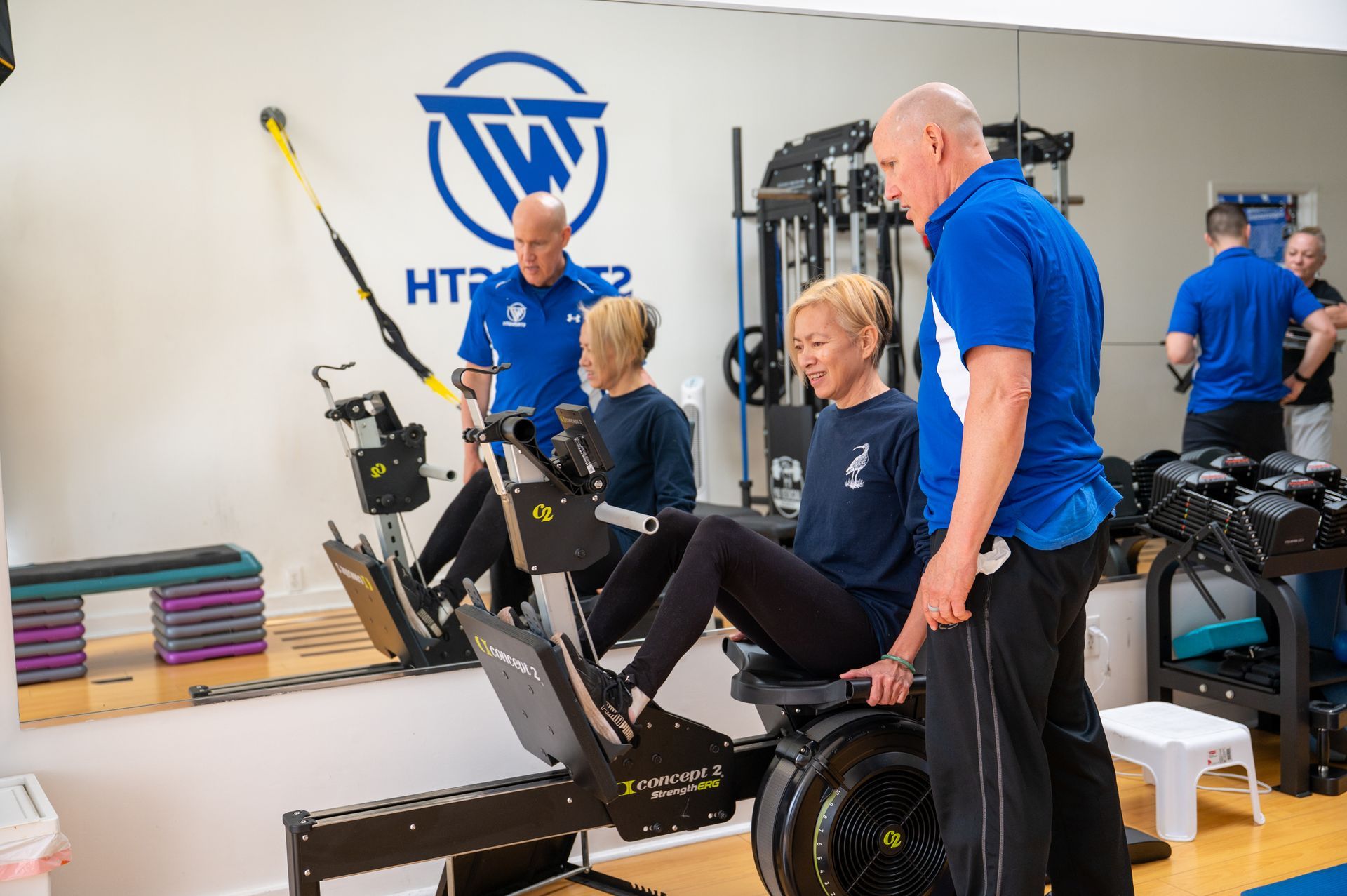
That’s why TNT is a coaching system—not a magic number.
What About Walking?
- Walk.
- Please.
- Move your body.
- Take the stairs.
- Walk after dinner.
- Go hiking.
- Ride your bicycle.
- Work in the garden.
- Play with your kids or grandkids.
- Park farther away.
Do whatever gets you moving and that you actually enjoy.
I’m not suggesting that H.I.T. and H.I.I.T. replace physical activity.
I’m suggesting that they can serve as the purposeful training component of an active lifestyle.
That’s an important distinction.
The TNT model isn’t:
“Exercise less and sit more.”
It’s:
“Train smarter and live more.”
The WHO guidelines emphasize both structured activity and reducing sedentary behavior. Even small increases in activity are beneficial for people who are currently inactive.
So don’t interpret this article as permission to become a professional couch potato.
Quite the opposite.
Train hard. Then go live your life.
The Difference Between Optimal and Necessary
This is where the “10 hours” headline really falls apart.
Scientists can identify an amount of activity associated with the lowest observed risk in a particular population.
That doesn’t automatically mean everyone needs to reach that level.
There’s a difference between:
“More is associated with additional benefit.”
and
“You need more.”
Those are not the same statement.
The 2026 study found that approximately 560–610 minutes of moderate-to-vigorous physical activity was associated with a greater than 30% cardiovascular risk reduction.
It did not establish that 560–610 minutes is a universal prescription.
It did not establish that those minutes need to be spent exercising.
And it did not establish that everyone who performs exactly that amount will achieve a particular reduction in cardiovascular risk.
That’s why we need to be careful with headlines.
Correlation is not prescription.
And an observational dose-response relationship isn’t the same thing as a randomized clinical trial telling you what to do.
Don’t Make Exercise So Complicated That People Quit
Here’s my biggest concern with the 10-hour headline.
Someone who currently does nothing hears:
“You need 10 hours of exercise every week.”
And thinks:
“Well, I can’t do that.”
So they do nothing.
That’s a failure.
The better message is:
Do something.
Then:
Do it consistently.
Then:
Progress intelligently.
And finally:
Find the dose that works for you.
That’s how sustainable exercise works.
Not by creating another impossible standard.
Brief Doesn’t Mean Easy
There’s one thing I don’t want anyone misunderstanding.
Brief does not mean easy.
A properly designed H.I.T. workout should be demanding.
A properly designed H.I.I.T. workout should be demanding.
If you’re spending 90 minutes in the gym but only doing a few minutes of genuinely productive work, you haven’t necessarily accomplished more than someone who spent 25 focused minutes training intelligently.
Time spent in the gym is not the adaptation.
Training is the stimulus.
The adaptation is what happens afterward.
That’s why I don’t care how long you worked out.
I care what the workout accomplished.
Six Workouts. Fourteen Days.
That’s the part that makes the TNT model provocative.
Imagine telling someone:
You don’t have to exercise every day.
Instead:
- Train your entire body three times.
- Challenge your cardiovascular system three times.
- Move throughout the day.
- Recover.
- Repeat.
That’s six purposeful workouts every two weeks.
For many people, that can provide a remarkably efficient foundation for strength and cardiovascular fitness.
For some people, it won’t be enough.
That’s okay.
The objective isn’t to prove that six workouts is a magic number.
The objective is to challenge the assumption that everyone needs hours and hours of structured exercise to become stronger, fitter and healthier.
They don’t.
TAKU’s NOTE:
Do I believe everyone needs 10 hours of exercise every week?
No.
Do I believe everyone should move more?
Absolutely.
Do I believe higher levels of physical activity can provide additional health benefits?
Yes.
Do I believe you need to spend 10 hours performing structured workouts to become stronger, fitter and healthier?
Absolutely not.
- The evidence supports resistance training.
- The evidence supports high-intensity interval training.
- The evidence supports regular physical activity.
And the evidence increasingly demonstrates that meaningful improvements in strength and cardiorespiratory fitness can be achieved through time-efficient training.
At TNT Strength, we’re not trying to win the Exercise Hours Olympics.
We’re trying to help people become stronger, fitter and more capable while spending as little time as necessary training—and as much time as possible actually living.
That’s Truth Not Trends .
H.I.T. + H.I.I.T.
Brief. Intense. Infrequent. Effective.
Then…
Go live your life.
Frequently Asked Questions
Do I really need 10 hours of exercise per week?
No. The 2026 study that generated the recent headlines did not establish a universal requirement for 10 hours of exercise. It found an association between approximately 560–610 minutes of moderate-to-vigorous physical activity and greater cardiovascular risk reduction.
Isn’t 150 minutes per week still the recommendation?
Yes. Current guidelines continue to recommend at least 150 minutes of moderate activity or 75 minutes of vigorous activity per week, along with muscle-strengthening activity. More activity can provide additional benefits.
Can three H.I.T. workouts every two weeks really be enough?
It can be an effective starting point for many people, particularly when workouts are properly designed, sufficiently intense and progressively adjusted. However, there is no scientific basis for claiming that exactly three sessions every two weeks is universally optimal.
What about building muscle?
More training volume can be useful when maximizing muscular hypertrophy is the goal. TNT’s H.I.T. + H.I.I.T. model is primarily about high-value strength, fitness and health with minimal time, rather than maximizing bodybuilding-style muscle growth.
Can H.I.I.T. replace all aerobic activity?
Not necessarily. H.I.I.T. is an efficient way to improve cardiorespiratory fitness, but walking and other forms of regular physical activity remain valuable.
Should I stop walking if I do H.I.I.T.?
Absolutely not.
- Walk more.
- Sit less.
- Move throughout the day.
H.I.I.T. is training. Movement is living. We want both.
Is H.I.T. or H.I.I.T. appropriate for everyone?
No exercise program is universally appropriate. High-intensity training should be individualized according to health status, age, training history, exercise tolerance and goals. People with medical concerns or significant risk factors should obtain appropriate medical guidance before beginning vigorous exercise.
What does “infrequent” mean?
It means allowing sufficient recovery between demanding sessions rather than automatically training hard every day. The appropriate frequency depends on the individual and the training stimulus.
Isn’t more exercise always better?
More physical activity can provide additional benefits, but the relationship isn’t infinite or linear. The important question isn’t simply:
“How much exercise can I tolerate?”
It’s:
“How much exercise do I actually need?”
That’s the question we should be asking.
References
- Liang Z, et al. Joint non-linear dose-response associations of device-measured physical activity and cardiorespiratory fitness with cardiovascular disease: a cohort and Mendelian randomisation study. British Journal of Sports Medicine. 2026.
- Shailendra P, Baldock KL, Li LSK, Bennie JA, Boyle T. Resistance Training and Mortality Risk: A Systematic Review and Meta-Analysis. American Journal of Preventive Medicine. 2022;63(2):277–285.
- Long-term resistance training with all-cause and cause-specific mortality: assessing dose-response and joint associations with aerobic physical activity. British Journal of Sports Medicine. 2026;60:874.
- Poon ET-C, Li H-Y, Gibala MJ, Wong SH-S, Ho RS-T. High-intensity interval training and cardiorespiratory fitness in adults: An umbrella review of systematic reviews and meta-analyses. Scandinavian Journal of Medicine & Science in Sports. 2024;34(5).
- World Health Organization. WHO Guidelines on Physical Activity and Sedentary Behaviour. Geneva: World Health Organization; 2020.
TNT Strength’s Takeaway
You don’t need to exercise all day to benefit from exercise.
- You need the right stimulus.
- You need enough recovery.
- You need consistency.
- And you need to move your body when you’re not training.
Train hard. Recover harder. Don’t waste time.
Truth Not Trends.
Experience the TNT Strength difference with a free workout.
START YOUR FITNESS TRANSFORMATION WITH A
FREE WORKOUT
Complete the form and we'll set up an appointment for you.
Recent Articles