WHO GIVES A Fartlek?

By TAKU
Fartlek, translated as “speed play”, is a form of training that has been around for many years. Fartlek training was developed in the 1930s by Swedish coach Gosta Holmer (1891–1983). It was designed for the Swedish cross-country teams that had been thrashed throughout the 1920s by Paavo Nurmi and the Finns. Holmér's plan used a faster-than-race pace and concentrated on both speed and endurance training.

Fartlek training is essentially a form of interval training performed in an informal, unstructured manner. Fartlek sessions should ideally be done outside over natural terrain such as golf courses, trails or rolling fields.

Because of its free-style nature and emphasis on fun, outdoor runs, Fartlek training can be psychologically stimulating in a positive manner. When properly executed Fartlek training has the ability to develop both general and specific endurance for a broad array of athletes including those participating in field games such as soccer, field hockey, ultimate frisbee, lacrosse, and rugby, as it develops aerobic and anaerobic capacities which are both used in these sports.

When implementing Fartlek sessions the pace should alternate between fast and slow with an emphasis on fast running. Outdoor Fartlek sessions are an excellent change of pace after being forced indoors during winter months or by bouts of inclement weather, (or the current Covid pandemic). Depending on how and when you cycle Fartlek runs into your current training regimen they may also act as a great form of active recovery.

When designing a Fartlek training session you are limited only by your imagination and the terrain you have access to. Remember Fartlek is a free style form of training. Look at it as structured improvisation. Do not worry too much about the exact order of exercises or distances that you run. Just be sure to challenge yourself and work hard.
Fartlek training is generally associated with running, but can include almost any kind of exercise. Below I have outlined just one example of the variety of exercises that could be included in a 2–mile Fartlek session:
-
Jog or jump rope for 5- 10 minutes as a warm-up.
-
Do 5-6 minutes of brisk calisthenics covering all major muscle groups.*
-
Run a half mile at a fast, steady pace (about 75% max speed).
-
Jog a quarter-mile.
-
Perform three to four acceleration sprints of 150 yards (jog 50 yards, stride 50 yards, sprint 50 yards) walk 50 yards after each.
-
Do four to six sprints of 20-50 yards, jogging 50 yards between each one.
-
Jog a quarter-mile as a warm-down.
-
Stretch all major muscle groups
*Example of calisthenic circuit: 30 seconds on 15 seconds off.
-
Walking Lunges
-
Mountain Climbers
-
Sit-ups
-
Burpees
-
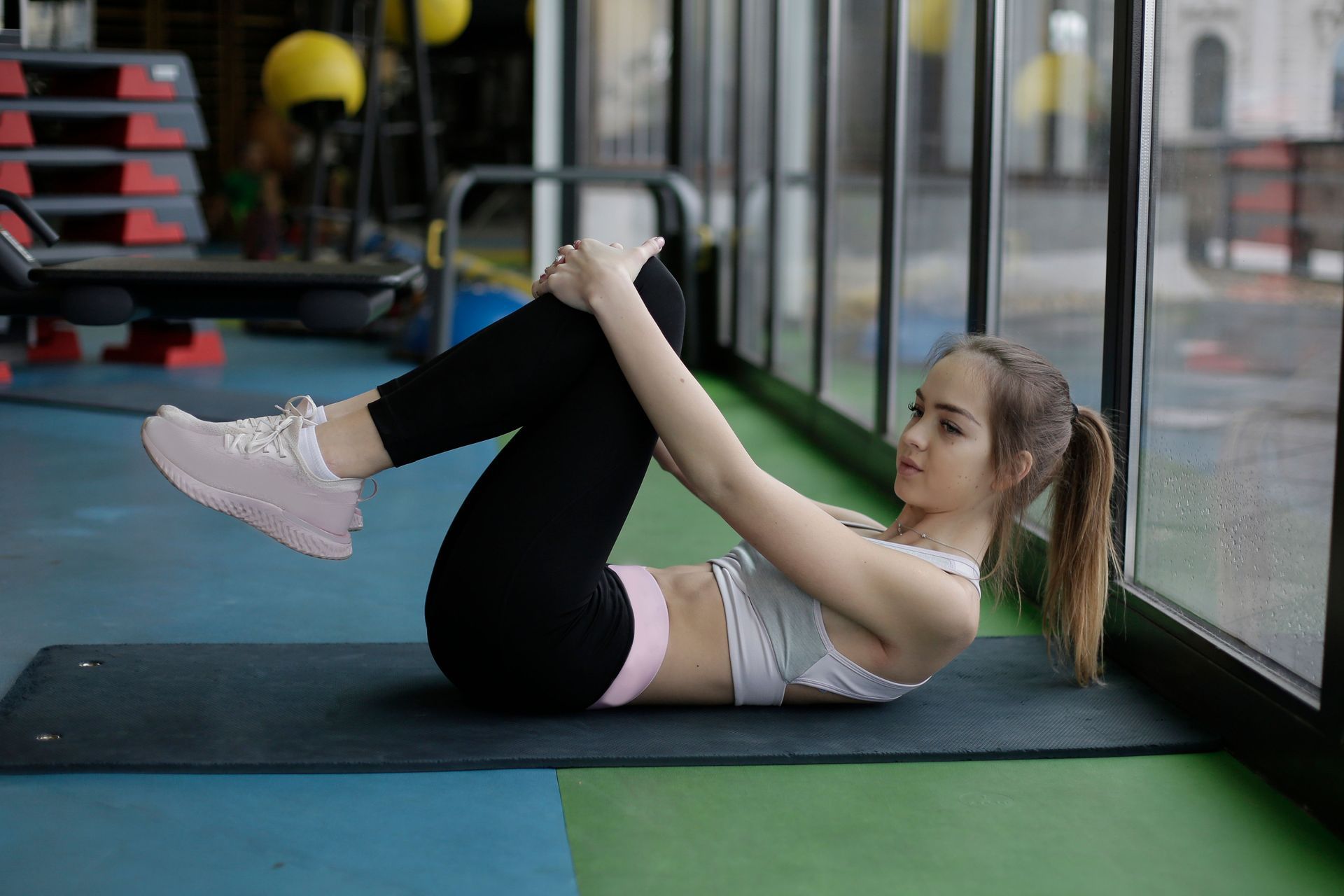
Bicycle crunches
-
Alternating back raise
-
Hamstring Bridges
-
T-stability push-ups
So there you have it, a simple and flexible system which practically guarantees that you will never get bored. Give Fartlek training a try and I am sure you will see and feel the fitness benefits while enjoying some time outdoors with nature.
TAKU’s NOTE: If you don’t feel like going outside is an option, you can create a zero-equipment circuit using just your body-weight. Try this:
Repeat circuit 6-8 times, resting as needed.
Eight-Count Bodybuilders x 5-10 Run in place 30 seconds (Sprint, don’t jog) Push-ups x 8-16 reps Jumps x 10-20
Experience the TNT Strength difference with a free workout.
START YOUR FITNESS TRANSFORMATION WITH A
FREE WORKOUT
Complete the form and we'll set up an appointment for you.
Recent Articles