Strength & Endurance: Two Sides of the Same Muscular Coin
Estimated Time to Read: 7 minutes
TL;DR
Muscular strength and muscular endurance aren’t separate qualities—they are tightly linked. When you get stronger, your ability to perform repeated submaximal work improves automatically. True strength training (high-effort, anaerobic muscular work) increases both strength and endurance because they stem from the same fundamental adaptations inside your muscle fibers. Build strength the right way, and endurance follows.
The Real Meaning of Muscular “Endurance”
Most people use the word endurance when they really mean cardiovascular fitness—wind, conditioning, VO2max, or their ability to keep moving without getting out of breath.
But when we talk about muscular endurance, we’re talking about something very different:
Muscular endurance is a muscle’s ability to continue producing force under anaerobic, high-effort conditions when fuel availability is limited.
It’s a local, muscular quality—not a lung or heart issue.
A person can have fantastic cardiovascular fitness and poor muscular endurance… or great muscular endurance and poor conditioning. The two abilities develop from very different types of training.
Muscular Strength and Muscular Endurance Are Directly Related
Here’s the part most people misunderstand:
When you increase muscular strength, you also increase muscular endurance—automatically and proportionally.
Why?
Because both qualities depend on the same muscular machinery:
- The amount of force your muscle fibers can produce
- The size and strength of those fibers
- The ability of those fibers to repeatedly resynthesize energy under high tension
If you can lift a heavier load for one maximal rep, you can also lift any submaximal load for more reps than before.
Example
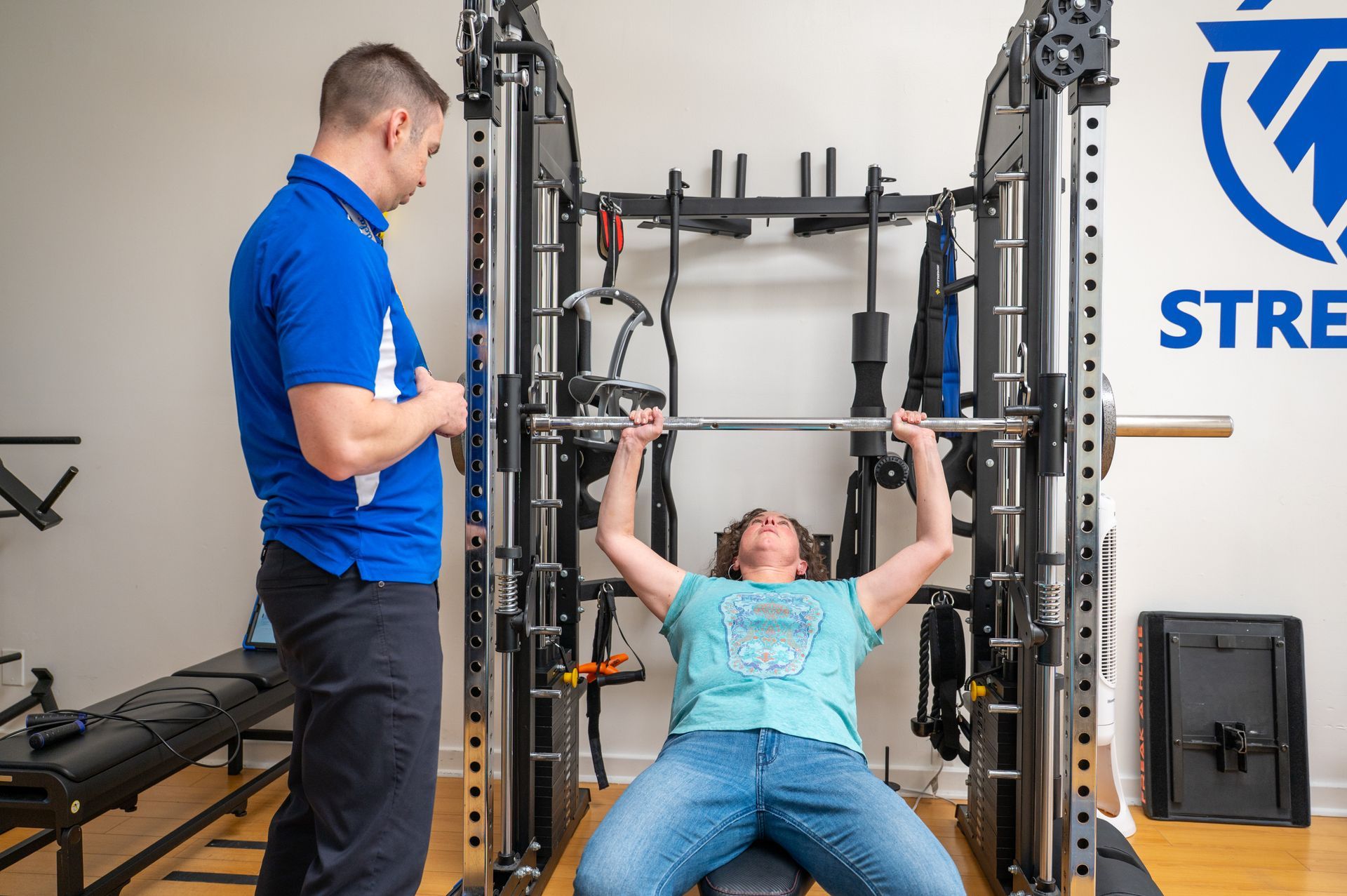
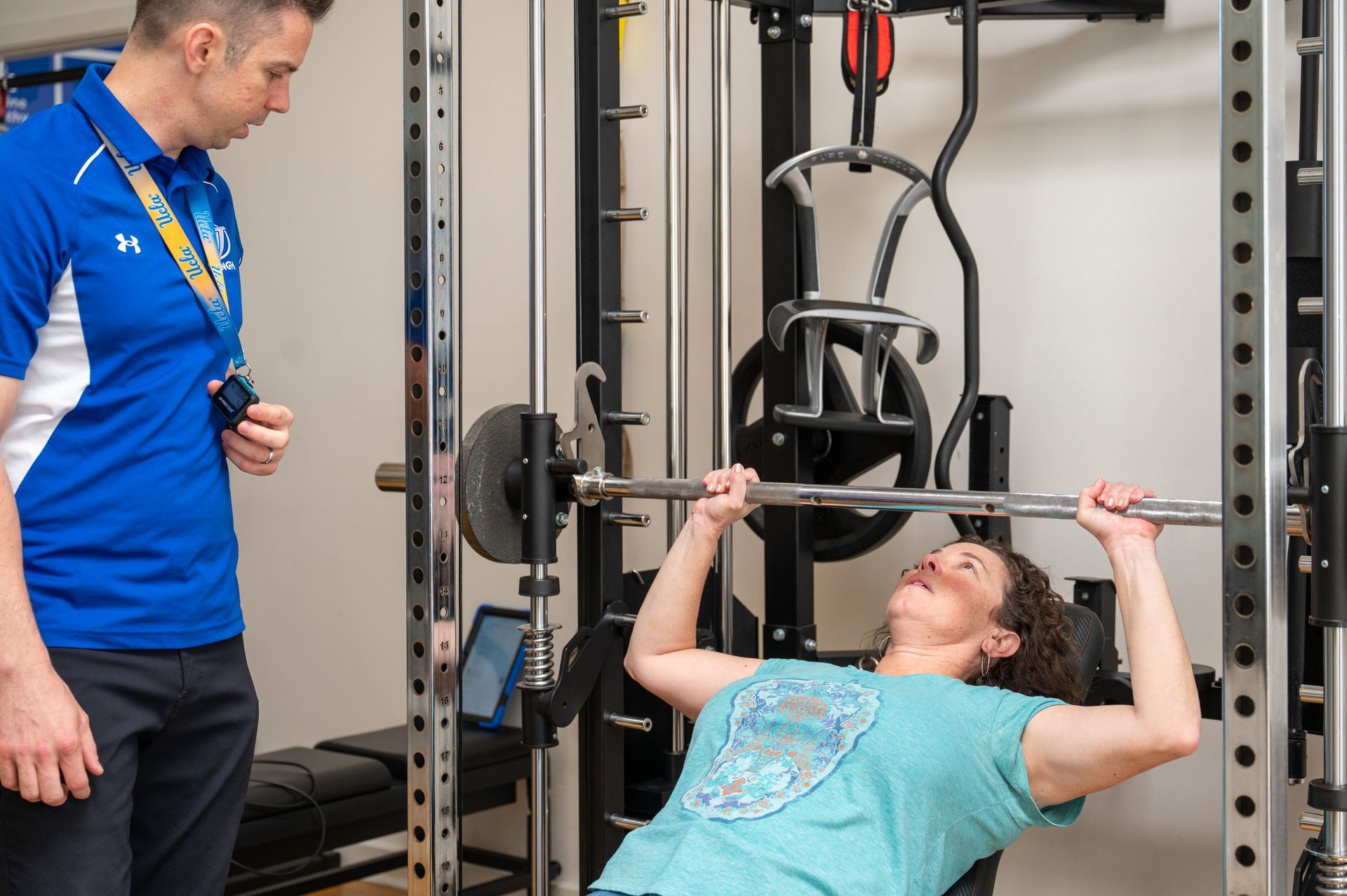
If you can bench press 250 lbs for 10 reps, you’ll have a predictable 1-rep max based on your own strength-endurance ratio. Most people fall close to a common pattern:
- 10 reps ≈ 83–85% of 1RM
- That means 250 lbs × (1 ÷ 0.83) ≈ 300 lbs 1RM
If you get stronger—say your 1RM increases from 300 lbs to 330 lbs—your rep strength improves in the same proportional way without doing any “endurance” training.
This is why practical strength training is the most time-efficient way to improve both qualities simultaneously.
Why the Last Rep Feels So Much Harder
In a set of high-effort strength work:
- Every rep uses stored muscular fuel (ATP, phosphocreatine, glycogen).
- Replenishment happens, but not fast enough to keep up.
- Tension stays high, so oxygen delivery remains limited (anaerobic environment).
- Each rep reduces your “momentary ability” until you eventually reach failure.
The weight didn’t get heavier—your available force output dropped.
As momentary strength decreases, muscular endurance ends at the exact point where you can no longer produce the required force.
This is the overload principle in action.
Why Strength Training Improves Muscular Endurance
When you repeatedly challenge a muscle to very high levels of effort, several adaptations occur:
- Increased muscle fiber size (hypertrophy)
- Increased maximal force production
- Elevated anaerobic enzyme activity
- Improved energy storage and resynthesis
- Improved local fatigue tolerance
All these changes improve your ability to do maximal work and repeated submaximal work.
So when strength goes up, endurance goes up. They’re not separate—they’re connected.
Anaerobic vs. Aerobic Work
To keep it simple:
Aerobic Work (Steady-State)
- Low to moderate intensity
- Primarily develops cardiopulmonary conditioning
- Does not significantly improve muscular strength
Anaerobic Work (High-Effort Strength Training)
- High muscular tension
- Reps limited by local muscular fatigue
- Maximizes strength and muscular endurance
- Minimal cardiovascular adaptation (unless programmed specifically)
If you want stronger muscles that can do more work, strength training is the target.
If you want more “wind,” do cardiovascular conditioning.
But don’t confuse one with the other.
FAQ
Q: Can I improve muscular endurance without strength training?
Not meaningfully. You can improve local fatigue resistance a little with light, high-rep work, but without increasing force capability (strength), total endurance improvements are limited.
Q: Do I need separate “strength” and “endurance” workouts?
No. If your goal is stronger, more capable muscles, focused strength training is enough. Strength and endurance improve together.
Q: Why do endurance athletes lift weights?
Because stronger muscles fatigue less at any given submaximal load. Strength training improves efficiency and reduces injury risk.
Q: Should I train with high reps for endurance and low reps for strength?
Not necessary. High-effort sets taken close to muscular failure—across a wide range of reps—improve both. Intensity of effort matters most.
Q: Does strength training help my cardiovascular fitness too?
It can improve cardiometabolic markers, but if peak conditioning is your goal, you’ll still benefit from dedicated cardiovascular training.
References
Muscular Strength & Endurance Relationship
- Dankel SJ, et al. Muscle adaptations across a range of resistance training volumes. Med Sci Sports Exerc. 2017.
- Morton RW, et al. Training for strength vs hypertrophy: role of effort and load. J Appl Physiol. 2019.
- Grgic J, et al. Strength and endurance adaptations from resistance training. Sports Med. 2022.
Anaerobic vs Aerobic Work
- McArdle WD, Katch FI, Katch VL. Exercise Physiology. 10th ed. 2022.
- Brooks GA, Fahey TD. Exercise Metabolism. Humana Press.
- ACSM Position Stand: Progression Models in Resistance Training. Med Sci Sports Exerc. 2009.
Energy Systems & Fatigue
- Hargreaves M, Spriet LL. Skeletal muscle energy metabolism during exercise. Nat Metab. 2020.
- Enoka RM, Duchateau J. Translating fatigue to performance. J Physiol. 2016.
Experience the TNT Strength difference with a free workout.
START YOUR FITNESS TRANSFORMATION WITH A
FREE WORKOUT
Complete the form and we'll set up an appointment for you.
Recent Articles