Strength Reserve: Why You Should Be Stronger Than Your Life Requires
Build more than you need. Maintain what you've earned.
Estimated reading time: 9–11 minutes
TL;DR
Being strong enough to perform today's daily activities is good. Having more strength than those activities require is even better.
That extra capacity is what we can call your strength reserve : the difference between what your body is capable of doing and what a particular task demands.
As we age, maintaining that reserve becomes increasingly important. Everyday activities don't necessarily become harder, but our physical capacity can gradually decline. Tasks that once felt effortless can eventually become challenging.
Progressive resistance training helps preserve and improve the strength that supports everyday independence, physical capability, and quality of life.
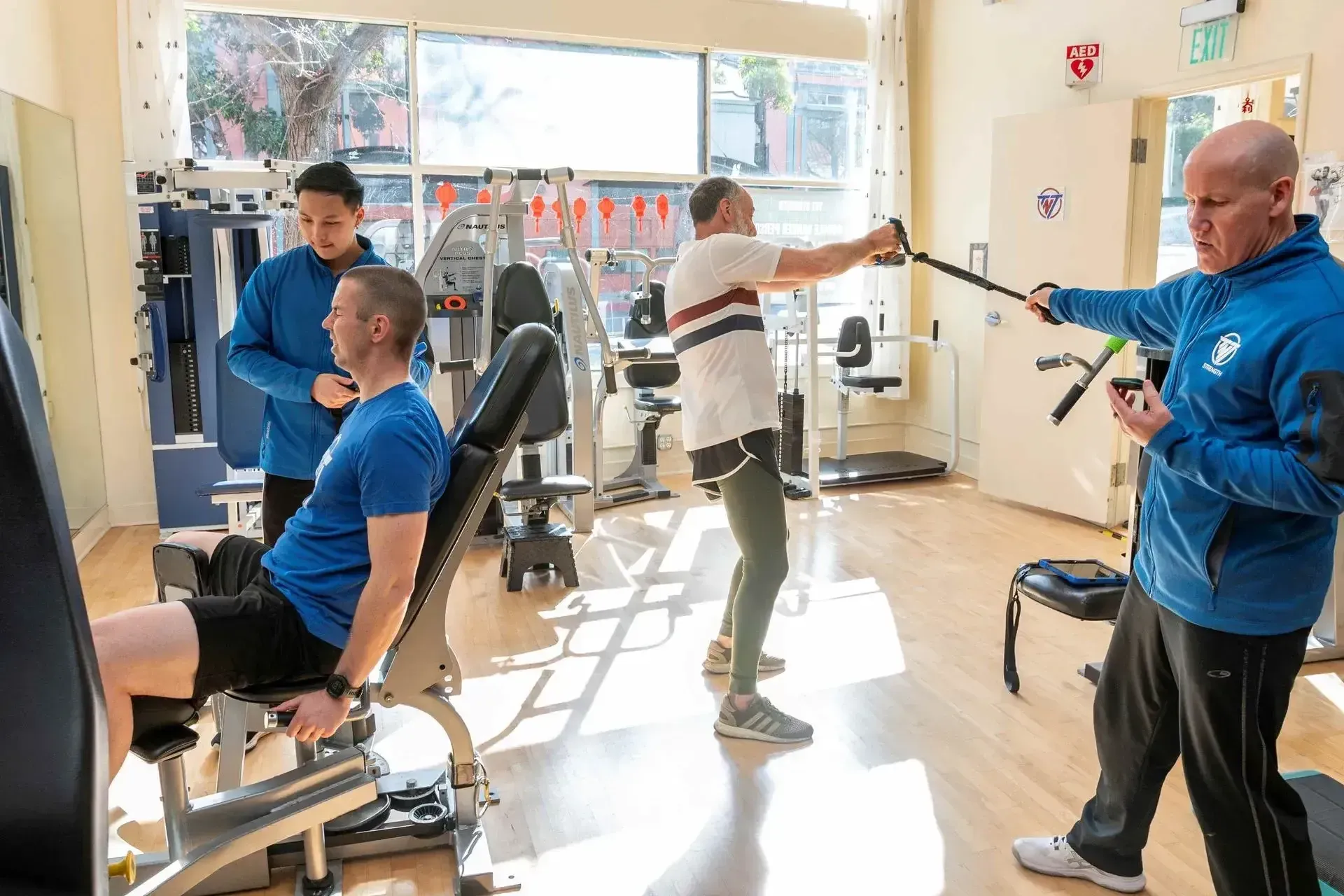
At TNT Strength, our approach is centered on applying resistance training as safely and efficiently as possible. The objective isn't to spend more time exercising than necessary. It's to build meaningful strength, maintain it, and make that strength useful for life.
The problem with being just strong enough
Imagine two people who can both comfortably carry a 40-pound suitcase.
- Person A has the physical capacity to carry 45 pounds.
- Person B has the physical capacity to carry 90 pounds.
Both can complete the task. But the same 40-pound suitcase represents a substantially greater percentage of Person A's available capacity.
Person B has more room to spare.
That difference matters.
When a physical task requires nearly everything you have, there is very little reserve available for unexpected demands, fatigue, or changes in circumstances.
When the same task represents only a fraction of your capacity, it generally requires less relative effort.
This is one reason I believe we should approach strength training with a different objective.
The goal shouldn't simply be to become strong enough to get through the day. The goal should be to develop more physical capacity than everyday life routinely demands.
What exactly is a strength reserve?
Strength reserve is a practical way of describing the difference between your available physical capacity and the physical capacity required to complete a task.
It isn't a formal clinical measurement or a standardized fitness test. It's a useful concept for understanding why maintaining strength matters.
Consider a few examples:
- Getting out of a chair requires a certain amount of lower-body strength.
- Carrying groceries requires strength in the hands, arms, shoulders, and trunk.
- Climbing stairs requires sufficient lower-body strength and muscular endurance.
- Picking something up from the floor requires the ability to produce force through the hips, legs, and trunk.
- Getting up after a fall can demand considerable strength and coordination.
If your physical capacity is well above what these activities require, you have a greater reserve.
If your capacity declines toward the level required to perform these activities, everyday life can become progressively more demanding.
One important qualification: strength is specific to the muscles, movements, and tasks being performed. Being exceptionally strong in one exercise doesn't automatically mean you'll be equally capable in every other movement.
Nevertheless, developing overall muscular strength provides an important foundation for physical capability.
Why this matters more as we get older
We don't have to wait until we're elderly to recognize the importance of maintaining strength.
Age-related changes in muscle mass, strength, and physical function can begin well before retirement age. The rate of decline varies considerably between individuals and is influenced by activity, training history, nutrition, health, and genetics.
The problem is that physical decline can be gradual.
You may not notice losing a little strength each year. You may simply notice that certain activities take more effort than they used to.
Eventually, the margin between what you can do and what you need to do becomes smaller.
This is where strength training becomes particularly valuable.
Resistance training provides a direct stimulus for maintaining and improving muscular strength. It can help preserve the physical capacity needed for everyday activities and support independence as we age.
The objective isn't necessarily to become exceptionally strong by competitive standards. It's to maintain enough strength that ordinary physical demands remain manageable.
In my opinion, that's a much more meaningful measure of fitness than simply looking good in a mirror.
Strength is more than lifting weights in a gym
The gym is where we can systematically apply resistance, challenge the muscular system, and measure progress.
But the benefits extend beyond the gym.
Consider what greater physical capacity can contribute to:
- Carrying luggage without struggling.
- Moving furniture or handling household projects.
- Getting up and down from the floor.
- Climbing stairs without feeling physically overwhelmed.
- Handling physically demanding recreational activities.
- Maintaining the ability to perform everyday tasks independently.
These are not extraordinary athletic accomplishments. They're ordinary activities that become easier when you have more physical capacity.
And that's the point.
We don't train simply to become better at exercising. We train to improve our ability to do the things we want and need to do outside the gym.
What does the science tell us?
The evidence supporting resistance training for improving and maintaining physical capacity is substantial.
A 2026 American College of Sports Medicine (ACSM) position stand reviewed a large body of resistance-training research involving more than 30,000 participants. The review found that resistance training improves muscular strength, muscle size, power, and several measures of physical performance and function.
The practical takeaway is straightforward: resistance training works, and its benefits extend beyond appearance.
Research involving older adults provides additional support.
A 2025 systematic review and network meta-analysis by Radaelli and colleagues examined 151 randomized trials involving more than 6,300 older adults. The researchers found that resistance training improved several important outcomes, including physical function and measures of muscular strength.
Another 2025 network meta-analysis by Wiedenmann and colleagues examined 102 trials involving approximately 4,750 community-dwelling older adults. The researchers found meaningful strength improvements across several resistance-training approaches, including machines, free weights, resistance bands, and bodyweight exercise.
Taken together, these findings reinforce an important message: maintaining and improving muscular strength is a worthwhile investment throughout adulthood.
The science doesn't suggest that everyone needs to train the same way. Individual circumstances, goals, exercise tolerance, training history, and recovery all matter.
But the broader conclusion is difficult to dispute: progressive resistance training is one of the most effective tools available for developing and maintaining muscular strength.
Building strength reserve doesn't require becoming a bodybuilder
This is an important distinction.
You don't need to pursue competitive bodybuilding, spend hours in the gym, or build an extraordinary amount of muscle to improve your physical capacity.
Strength and muscle size are related, but they aren't identical. Improvements in strength also involve changes in the nervous system, including the ability to recruit and coordinate muscular effort.
The objective should be to develop the strength necessary to support the activities and lifestyle you want to maintain.
For some people, that means being able to carry their grandchildren, travel comfortably, or work around the house.
For others, it means continuing to enjoy hiking, cycling, martial arts, recreational sports, or other physically demanding activities.
The point is to build capacity that serves your life.
How do you build a strength reserve?
The process isn't complicated, but it does require consistency and an intelligent approach.
1. Establish a baseline
You need to know where you're starting.
Assess your current strength, physical capabilities, limitations, and training history. Identify areas that need attention and establish a reasonable starting point.
You can't measure progress without knowing your baseline.
2. Train the major muscle groups
A comprehensive resistance-training program should address the major muscle groups of the body.
This includes the muscles involved in pushing, pulling, squatting, hinging, and other fundamental movement patterns.
Exercise selection should account for individual capabilities, joint limitations, previous injuries, and training experience.
There is no requirement to use a particular exercise simply because it's popular. The best exercise is one that appropriately challenges the intended muscles while allowing safe, controlled execution.
3. Apply an appropriate level of effort
Muscles need a meaningful stimulus to become stronger.
Simply going through the motions is unlikely to produce the same results as progressively challenging the muscular system.
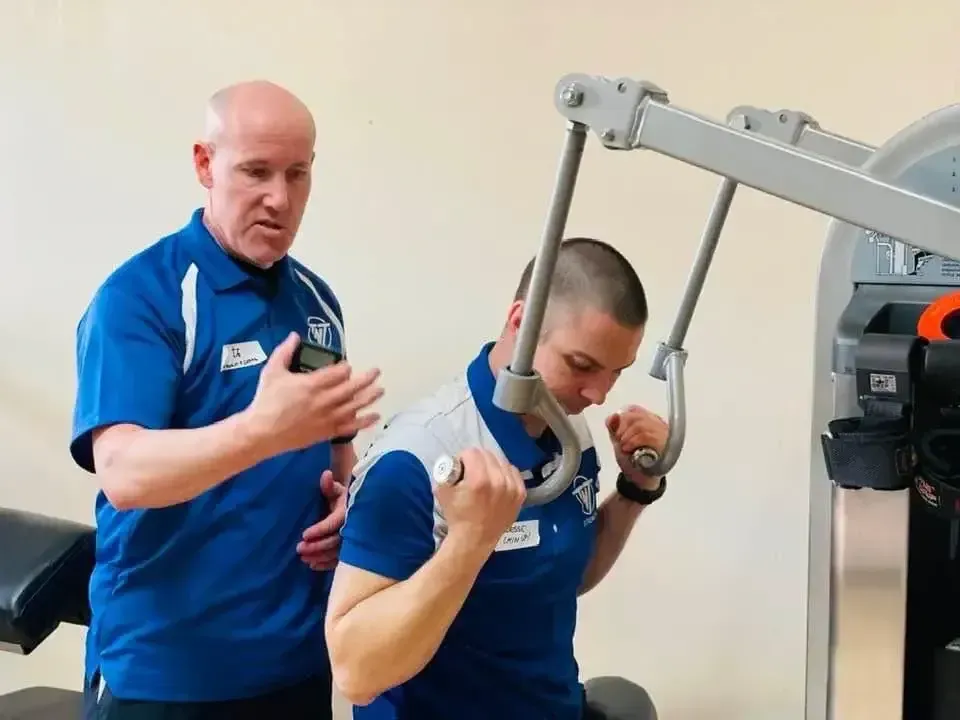
At TNT, we emphasize productive effort, controlled movement, and maintaining proper execution throughout each exercise.
Our use of momentary muscular failure (MMF) , when appropriate, means reaching the point where another repetition cannot be completed through the prescribed range of motion with acceptable technique.
It does not mean forcing repetitions, sacrificing form, or ignoring pain.
Effort matters, but it must be applied intelligently.
4. Progress over time
Your body adapts to the demands placed upon it.
As strength improves, the training stimulus may need to change to continue encouraging progress.
This can involve increasing resistance, improving performance with a given resistance, or making other appropriate adjustments to the exercise prescription.
Progress should be measurable, gradual, and based on performance rather than ego.
5. Allow adequate recovery
Training provides the stimulus. Recovery allows adaptation to occur.
More exercise is not automatically better. The appropriate amount of training depends on the individual, the intensity of the work, training experience, nutrition, sleep, and overall recovery capacity.
A well-designed program considers both the stimulus and the recovery required to benefit from it.
6. Maintain what you've earned
Building strength is only part of the equation.
Maintaining it requires continued exposure to an appropriate training stimulus.
This is especially important as we get older. Strength is not something we build once and keep forever without continued effort.
The objective is to make strength training a sustainable part of life.
Strength reserve isn't the same as being prepared for everything
It's important to recognize that muscular strength is only one component of physical fitness.
Strength contributes to many everyday activities, but it doesn't automatically provide balance, coordination, mobility, cardiovascular endurance, or proficiency in every physical task.
These qualities deserve attention in their own right.
For example, balance is task-specific. Practicing a particular balance challenge can improve performance at that task, but standing on an unstable surface doesn't automatically translate into better balance in every real-world situation.
- If you want to improve your ability to navigate stairs, practice stairs.
- If you want to improve your ability to get up from the floor, practice getting up from the floor.
- If you want to improve coordination for a particular activity, practice that activity.
Specific abilities require specific practice.
Strength training provides an important foundation, but it should be part of a broader approach to maintaining physical capability.
The TNT perspective: Everything becomes easier the stronger you are
At TNT Strength, we have a simple philosophy: build strength that makes life easier.
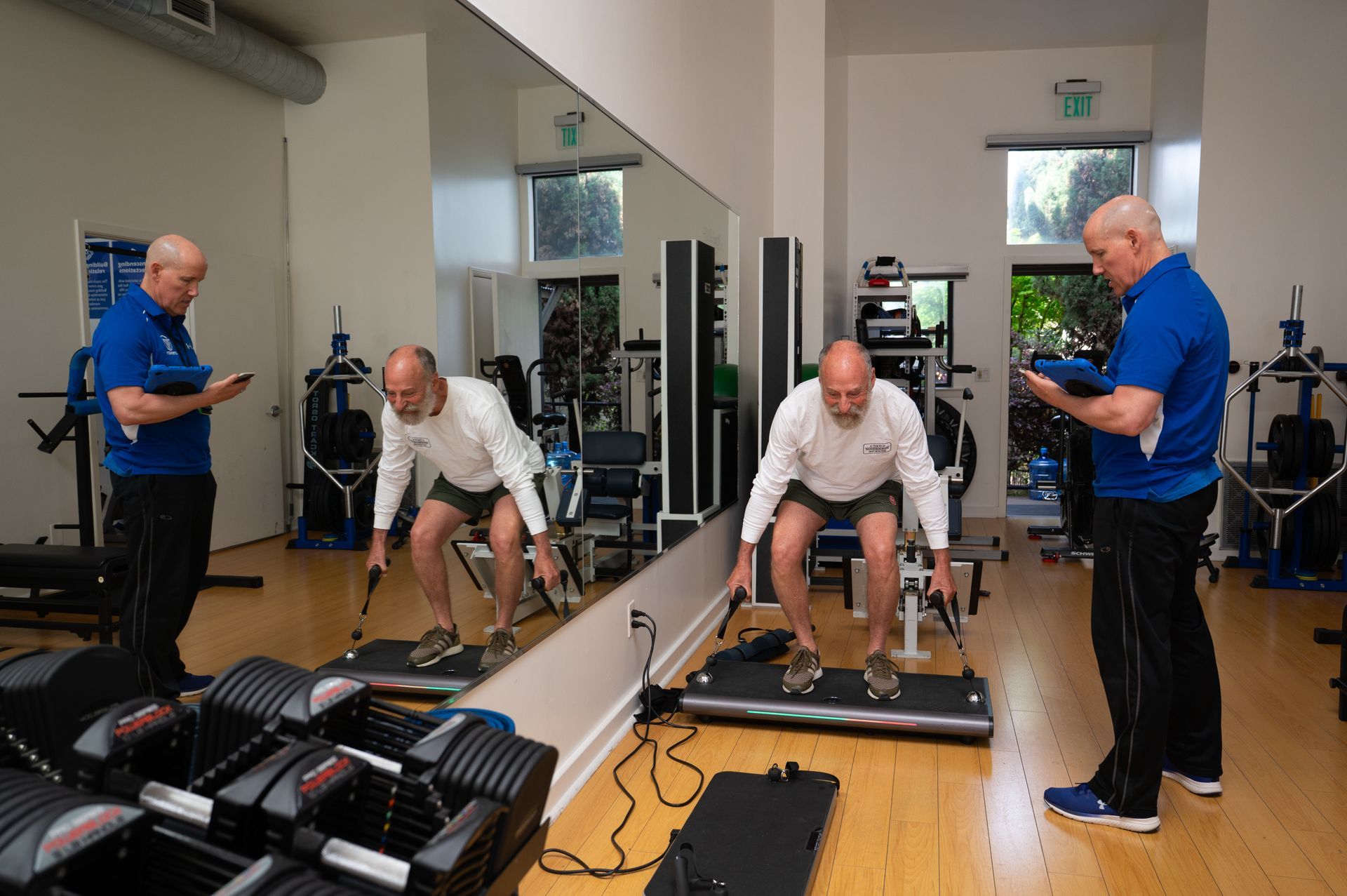
Our approach is focused on the safest and most efficient application of resistance training available for the individual. That means appropriate exercise selection, controlled execution, productive effort, measurable progression, and adequate recovery.
We aren't interested in making exercise unnecessarily complicated or turning every workout into an endurance event.
We're interested in results.
Whether you're training at our Rockridge studio in Oakland or our North Berkeley location , the objective remains the same: develop meaningful strength, maintain it, and make it useful.
You don't need to become a professional athlete or competitive bodybuilder to benefit from being stronger.
You simply need enough physical capacity to handle the demands of your life—and preferably quite a bit more.
That extra capacity gives you options. It gives you room to handle the unexpected. And it helps keep ordinary activities from becoming extraordinary challenges.
Build more than you need. Maintain what you've earned.
Because everything becomes easier the stronger you are.
F. A. Q.
Q: What is strength reserve?
A: Strength reserve is the difference between your available physical capacity and the strength required to complete a particular task. Having more strength than a task requires generally means that task represents a smaller percentage of your available capacity.
Q: Why is strength reserve important as we age?
A: Age-related changes can gradually reduce muscular strength and physical capacity. Maintaining a greater reserve helps keep everyday activities manageable and supports long-term independence.
Q: Do I need to build a lot of muscle to improve my strength reserve?
A: No. Strength improvements involve both muscular and neurological adaptations. You can become meaningfully stronger without pursuing bodybuilding-level muscle development.
Q: Does strength training improve everyday function?
A: Yes. Research consistently shows that resistance training can improve muscular strength and several measures of physical function. However, strength gains do not automatically transfer to every movement or activity.
Q: How often should I strength train?
A: The appropriate frequency depends on the individual, training intensity, recovery, experience, and goals. Consistency and an appropriate training stimulus matter more than following a universal schedule.
Q: Do I need to train to momentary muscular failure?
A: Not everyone needs to use MMF in every exercise or training situation. At TNT, we use it as an effort endpoint when appropriate, while prioritizing controlled execution, safety, and individual tolerance.
Q: Do I need heavy weights to build strength?
A: Resistance must provide an appropriate challenge, but that doesn't mean everyone needs to lift maximal loads. Exercise selection and resistance should reflect the individual's capabilities and goals.
Q: Does being stronger automatically improve balance and coordination?
A: No. Strength and balance are related aspects of physical function, but they are distinct abilities. Balance and coordination should be practiced through activities that reflect the skills you want to improve.
Q: Can I measure my strength reserve?
A: There is no single standardized measurement of strength reserve. You can, however, track strength improvements through repeatable exercises and assess your ability to perform meaningful everyday tasks.
Q: Is it too late to start strength training?
A: No. Research demonstrates that adults can improve muscular strength well into older age. Training should be appropriate to the individual's health, experience, and physical capabilities.
Q: What's the ultimate goal of strength training?
A: To develop and maintain enough physical capacity to make life easier, preserve independence, and continue doing the things you enjoy.
References:
- Currier BS, D'Souza AC, Fiatarone Singh MA, et al. (2026). Resistance Training Prescription for Muscle Function, Hypertrophy, and Physical Performance in Healthy Adults: An Overview of Reviews. Medicine & Science in Sports & Exercise , 58(4), 851–872. https://doi.org/10.1249/MSS.0000000000003897
- Radaelli R, Rech A, Molinari T, Markarian AM, Petropoulou M, Granacher U, Hortobágyi T, Lopez P. (2025). Effects of Resistance Training Volume on Physical Function, Lean Body Mass and Lower-Body Muscle Hypertrophy and Strength in Older Adults: A Systematic Review and Network Meta-analysis of 151 Randomised Trials. Sports Medicine , 55(1), 167–192. https://doi.org/10.1007/s40279-024-02123-z
- Wiedenmann T, Held S, Morat T, Rappelt L, Isenmann E, Berndsen E, Hopp NH, Donath L. (2025). The Effects of Different Resistance Training Modalities on Muscle Strength in Community-Dwelling Older Adults: A Network Meta-Analysis. Gerontology , 71(7), 576–588. https://doi.org/10.1159/000546346
Experience the TNT Strength difference with a free workout.
START YOUR FITNESS TRANSFORMATION WITH A
FREE WORKOUT
Complete the form and we'll set up an appointment for you.
Recent Articles