So You Want To Be A More Powerful Athlete?
TAKU • March 25, 2023

It has been established that power involves three components: (1) muscle force, (2) the distance of force application, and (3) the time of force application. Therefore, power can be enhanced by: (1) increasing the muscle force, (2) increasing the distance of force application, or (3) decreasing the time of force application. These are basic, irrefutable laws of physics.
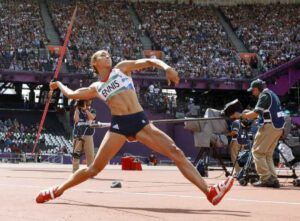
But what about developing power for athletics in the weight room? Is there a "best" way to go about it? Let's take a closer look.
Any type of progressive strength-training, regardless of movement speed, will elicit gains in muscle hypertrophy with concurrent enhancements in strength and power. However there are a few things to take into consideration when creating a workout plan aimed not only at achieving maximum power output but on doing so safely and efficiently.

No matter the speed of movement used, muscle fibers are recruited in a fixed order: slow twitch / type 1 --> intermediate / type 2 --> fast twitch / type 2A --> fast twitch / type 2B & 2C. Generally speaking, if the demand is low, the slow/type 1 fibers are called upon. As the demand for
EFFORT
increases, the higher threshold, fast / type 2 fibers are called upon.
Creating high tension in the muscle fibers and working to momentary muscular failure involves the greatest amount of relative muscle tissue. Effort (working to fatigue) and using good form (controlled movement with no bouncing or jerking) are important here. If in doubt, slow it down and aim for maximum repetitions (safely).
A variety of exercise prescriptions can be used provided muscle overload occurs, such as heavy resistances / few repetitions, lighter resistances / more repetitions, minimal exercise bouts (i.e., 1 to 3 sets per muscle group) and / or varied rest time between sets and exercises (i.e., 30 seconds to 3:00+).

There is no skill transfer from a weight room exercise to a totally different athletic skill done in competition. The principle of specificity clearly states that for a positive transfer to occur, exactness in a number of factors must be present. The fact is, no weight room exercise exactly replicates any sport skill (other than the sports of weightlifting and power lifting). That is why one should practice his / her sport skills separately, then generally improve total-body weight room strength.
At TNT
Strength, we recommend that coaches and athletes implement smoother, more controlled lifting speeds (approximately 1-2 seconds for raising the weight, and 3-4 seconds for lowering the weight is a great place to start) for the following reasons:
1) Controlled movement speed reduces momentum, allowing the target musculature to perform the work.
2) Controlled movement speed minimizes abrupt acceleration and deceleration forces, thus reducing the probability of muscle and connective tissue trauma.
3) Controlled movement speed creates and maintains more muscle tension.
4) Controlled movement speed produces more force output.
Although anyone can alter their strength, muscle size and body composition via strength training, their genetic endowment effects the magnitude of potential gains in the weight room. Those blessed with a high percentage of the slow / type 1 muscle fibers may not develop large muscles or great strength. Likewise, those who more easily get bigger and super-strong most likely possess a greater volume of the larger, more powerful type 2 fibers. Also, longer arms / legs and unfavorable muscle origins and insertions hinder great strength demonstration. Ultra-strong humans – male or female – usually have exceptional body leverages to allow for this.
TAKU's NOTE:
For anyone preferring to implement strength-training exercises that are more ballistic in nature (e.g., Olympic- style lifting and its variations), we recommend that you seek the tutelage and advice from qualified individuals and/or organizations who have expertise in that area.
References:
1) Behm, D.G., Sale, D., Intended Rather than Actual Movement Velocity Determines Velocity-Specific Training Response, Journal of Applied Physiology, 74(1): 359-368, 1993.
2) Carpinelli, R., Speed of Movement for Building Optimal Strength, HIT Newsletter, 1996.
3) Kelso, T., The Basics of Muscle Contraction: Implications for Strength Training, In Maximize Your Training ( Brzycki, M., ed.), Ch. 3, 35-80, Masters Press, Lincolnwood, IL, 1999.
4) Tohji, H., et al., Effects of Combined Training Programs on Force-Velocity Relation and Power Output in Human Muscle, Thirteenth International Congress on Biomechanics, (Marshall et al., eds.), University of Western Australia, Perth, 311-312,1991.
5) Wakeham, T., Improving Speed, Power, and Explosiveness, In Maximize Your Training, (Brzycki,M., ed.) Ch. 20, 257- 270, Masters Press, Lincolnwood, IL, 1999.
If you are Looking for the best Strength Training tool for in Home Training I Highly recommend that you check out the Harambe System. As far as I am concerned it is the best home gym on the market. If you visit their website you can get 10% off using the code TNT at checkout.
For more ideas about creating simple effective strength training and conditioning programs check back here frequently or visit us at: www.tntstrength.com
Register your name and email address on the site to Get Our Free Nutrition & Training PDF! And so you can be kept up-to-date on the latest news from TNT Strength.
Experience the TNT Strength difference with a free workout.
START YOUR FITNESS TRANSFORMATION WITH A
FREE WORKOUT
Complete the form and we'll set up an appointment for you.
Recent Articles
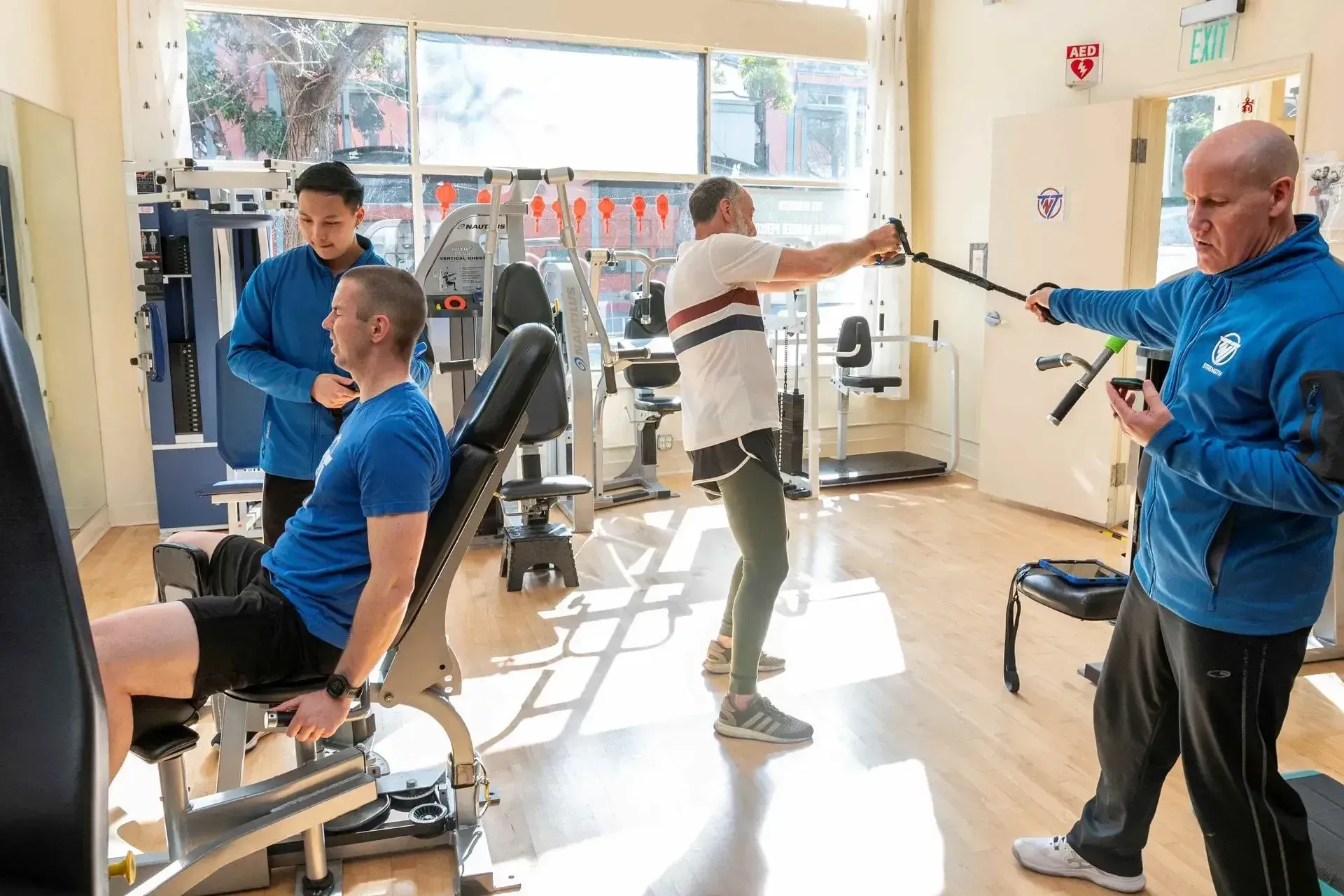
Afraid strength training will make you bulky? TNT Strength Oakland explains why muscle growth is gradual and individual, and why women can lift without fear.

Minimum Effective Variety: find the least food variety your Personal Eating Plan needs to stay nutritious, enjoyable and consistent. TNT Strength, Oakland.
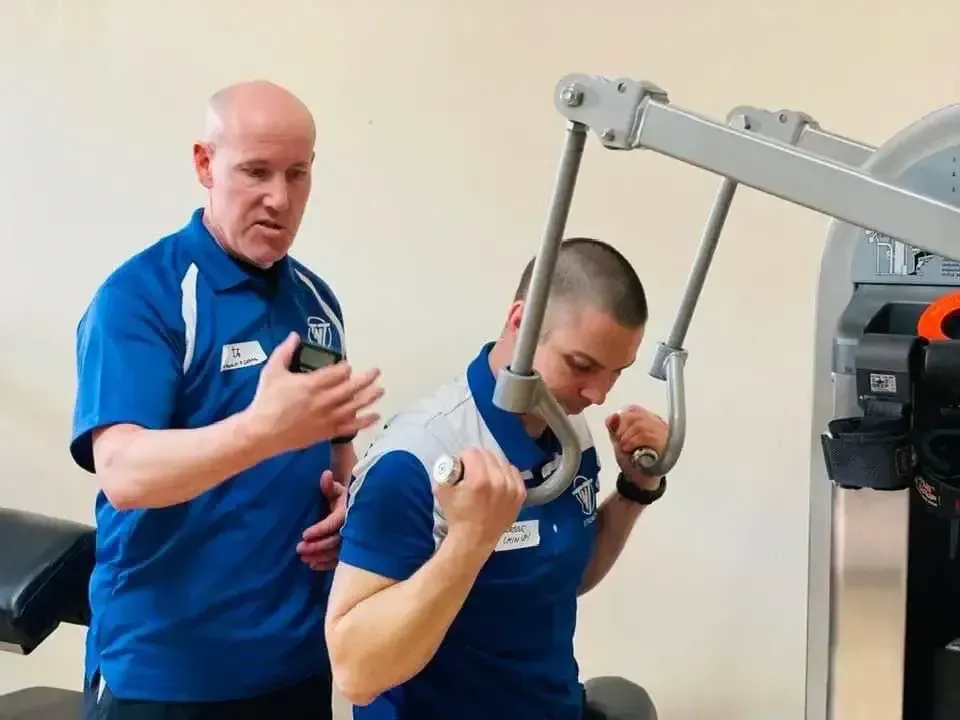
Is velocity-based training worth it? Oakland's TNT Strength breaks down the VBT research on bar velocity, velocity loss, RPE and autoregulation.

Discover what the research really says about youth strength training. TNT Strength in Oakland's Rockridge and North Berkeley shares safe, expert-backed guidelines for kids and teens.
Protein and fat are essential nutrients that build your body's structure, while carbs are just fuel. Learn why macros matter for strength training and health.
A viral headline says you need 10 hours of exercise a week for heart health. TNT Strength's Liam "TAKU" Bauer breaks down the real study and the H.I.T. + H.I.I.T. alternative.
Fast fat loss almost always rebounds. Learn why crash diets fail Rockridge & North Berkeley clients, and how TNT Strength builds sustainable fat loss through strength training and nutrition.
TNT Strength Oakland breaks down why muscular strength and muscular endurance aren't separate qualities — build strength the right way and endurance follows automatically.
Simple, high-protein meals from TNT Strength Oakland to help fight inflammation, build muscle, and support joint health. Recipes, snacks, and FAQs inside.