Functional Isometrics: Part Two
By TAKU
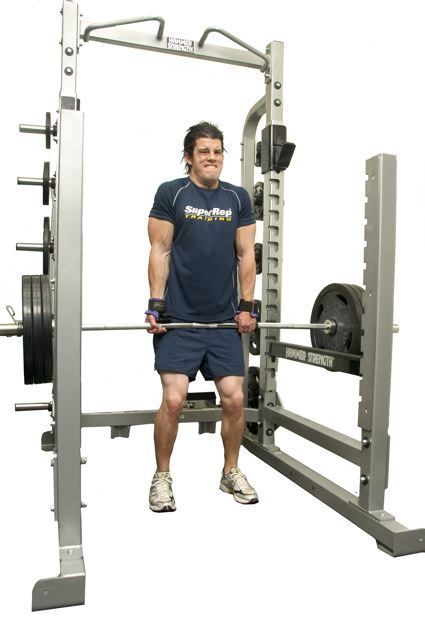
In Part One of this article we learned about some different forms of strength training and discussed their similarities and differences including Isometrics and Functional Isometrics. In part two we will take a closer look at how to incorporate these concepts into a your workout program. I will also introduce the concept of Static Contraction training an ultra brief, intense and efficient workout system based on the Functional isometric concept.
Exercise Example:
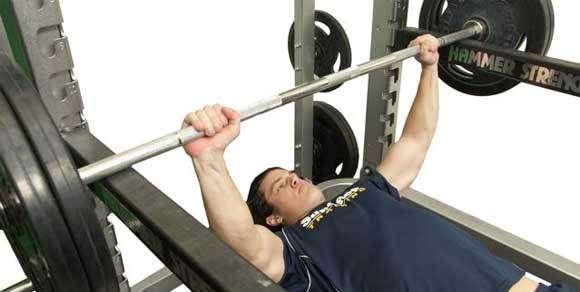
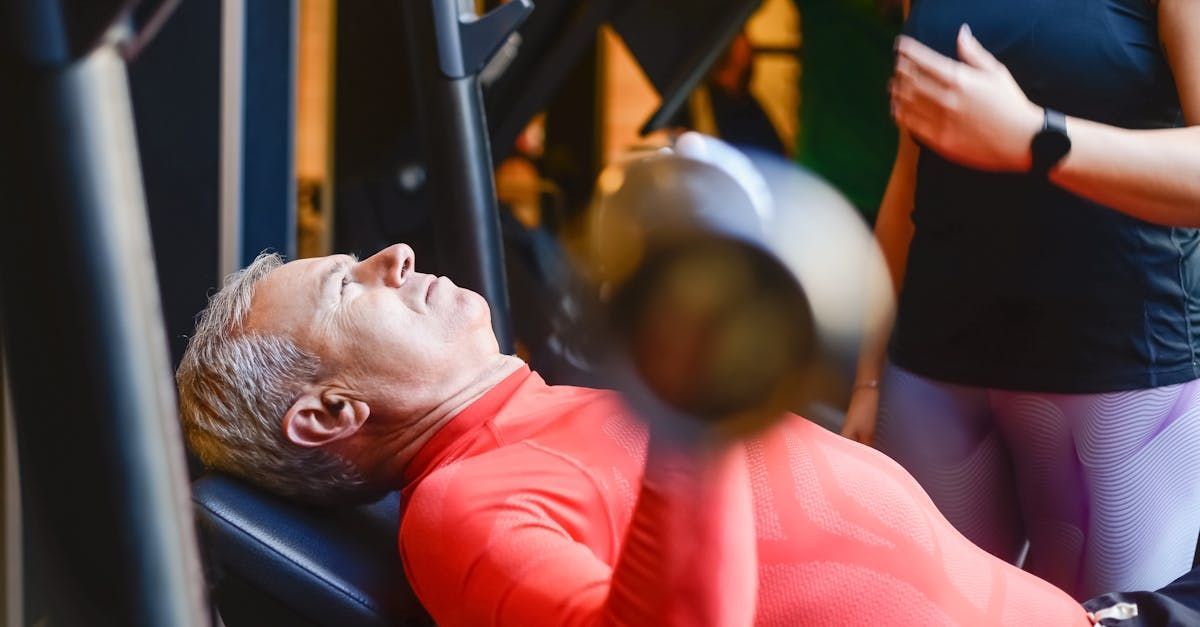
Lets take a look at the execution of the Bench Press using the Functional isometric training style discussed in part one.
Step One: First you will need a good Power Rack / Cage or Smith Machine with multiple height adjustments. Set the safety pins at a position about even with the bottom of your range of movement. Load a weight that is about 50% of your current max. If you rarely or never perform 1RMs then estimate from a 5-10 RM using an RM calculator . You will then position yourself under the bar and get yourself set in a good, solid, pressing position (do I need to explain how to properly bench press?). Lift the bar and hold it just a few inches off the bottom pins, for 6-10 seconds. If it felt super easy, add some weight, rest up a couple minutes and do it again. Once it feels really challenging at that height your done.
Step Two: Raise the pins to the mid-range or sticking point of the movement. At this point (if you are not already there) add enough weight so that you are at or near your current max. Lift the bar and hold it just few inches off the pins, for 6-10 seconds. If it felt super easy, add some weight, rest up a couple minutes and do it again. Once it feels really challenging at that height your done.
Step Three: Raise the pins so that they are just a few inches away from your lock-out position (4-6 inches). At this point (depending on how your other sets have gone) add enough weight so that you are at or slightly above your current max. Lift the bar and hold it just a few inches off the pins, for 6-10 seconds. If it felt super easy, add some weight, rest up a couple minutes and do it again. Once it feels really challenging at that height your done.
When performing these types of sets you want to strive for maximum efficiency. The more accurate your records the less weight adjustments you will be required to make. The goal is for you to know exactly how much weight will challenge you in each range, for each movement. This may take a week or two to figure out. Once you have your weight dialed in for each movement, you should perform no more then one, all-out contraction for 6-10 seconds in each of the three positions.
I often cycle Functional isometrics into my own strength training program for several months at a time. I find these types of workouts to be very challenging and extremely effective and efficient. I will load up for the exercise I am going to perform and start with the weakest part of the range first. I then do one, all-out contraction for 6-10 seconds in that position. I raise the weight to the next part of my ROM and after a brief rest, complete another 6-10 second contraction. One more adjustment, one more contraction, and I am done for that exercise. I find I can complete and entire full-body workout in as little as 20 minutes. This is possible because I know exactly how much weight to use for each movement which makes set up quite simple.
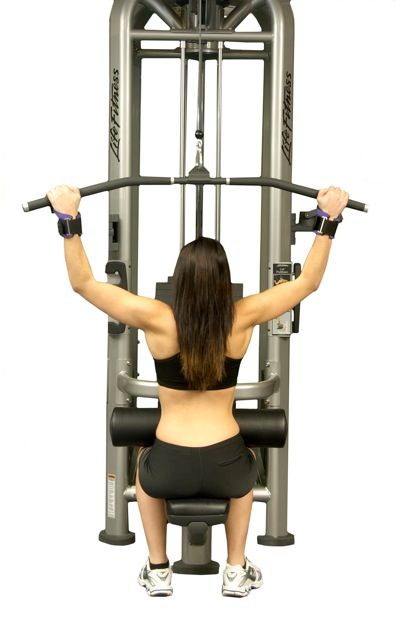
There are thousands of athletes and general fitness enthusiasts around the world who use a type of Functional isometrics termed Static Contraction training as their only form of strength training. In this style you perform just one, all out contraction in the strongest range for each basic pushing and pulling movement. As I mentioned earlier in this article, this style of training is easiest to perform with a dedicated device such as those produced by ONE REP GYM however terrific results can be had using conventional equipment as well.
With just a little practice and dedication you can learn to fine tune the specific ROM of each exercise to produce amazing results in just a few minutes per workout. Static contractions performed in the strongest range, using one all-out contraction, for as little as 6-10 seconds, can produce rapid improvements in muscular strength and performance. Now those of you who are really paying attention may be saying “hey, what about the joint angle specificity problem you mentioned above? For many people The 15-20 degree carryover on either side of a specific joint angle is more then enough to supply usable functional strength for all activities. For some blessed with what is termed a type “G” strength curve , training in just about any part of ones ROM will produce results throughout the entire ROM (This is a genetic attribute and not subject to change).
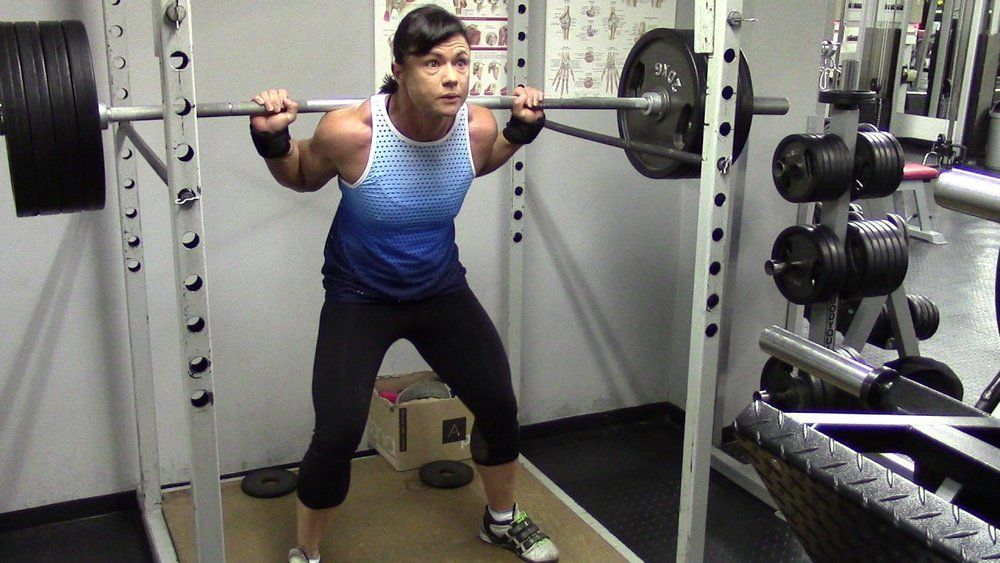
The bottom line is that when performing functional isometrics using the Static Contraction method, one may complete a brief, intense workout in just 3-5 minutes (not including set up, breakdown and rest). Individuals who regularly use this style of training will often rest and recover for 7-10 days (sometimes more) before the next session. For those who feel that they do not have time to strength train, Static Contraction training my be the tool you have been searching for.
Now get to it!
TAKU’s NOTE:. Functional isometrics are a great tool to have in your tool box. Whether you decide to buy and use a dedicated machine or to incorporate these into your regular weight workouts, I highly recommend you give Functional isometrics a try. Don’t be surprised to find your strength shooting up to new heights in a few short weeks. There are several different options available for dedicated Isometric training machines. On the High End is The ViiiV Pro. Mid Range would be the 1RepGym. And finally the least expensive but still extremely effective Iso-Max from Dragon Door.
References:
-
Graves, J., Pollock, M., Jones, A., Colvin, A., & Leggett, S. (1989). Specificity of limited range of motion variable resistance training. Medicine And Science In Sports And Exercise, 21(1), 84-89.
-
Knapik JA. Mawdsley RH. Ramos MU: Angular Specificity and Test Mode Specificity of Isometric and lsokinetic Strength Training. Journal Of Orthopaedic & Sports Physical Therapy 5:58-65.1983
-
Kitai, T., & Sale, D. (1989). Specificity of joint angle in isometric training. European Journal Of Applied Physiology And Occupational Physiology, 58(7), 744-748. doi:10.1007/bf00637386
-
Jackson, A. (1985). Strength Development: Using Functional Isometrics in an Isotonic Strength Training Program. Research Quarterly For Exercise And Sport, 56(3), 234-37
Experience the TNT Strength difference with a free workout.
START YOUR FITNESS TRANSFORMATION WITH A
FREE WORKOUT
Complete the form and we'll set up an appointment for you.
Recent Articles